


Bitcoin’s digitality is what gives it most of its benefits. It is programmeable and can unlock self-custody, which makes thefts or confiscations very difficult. Digital technology allows it to be transported at lightning speed. This allows for the settlement of transactions and the movement of money across the globe within minutes.
Bitcoin was criticized at various times for its difficulty to grasp. In its original state, Bitcoin cannot be held or touched; it is only imaginable. Many people find this barrier to be significant and have made many attempts to get the currency into meat space. But it’s not easy.
Since well over 10 years, entrepreneurs and artists have been working to make Bitcoin tangible in a manner that preserves the most valuable properties of cash. While nobody has completely solved the issue, there has still been significant progress, leaving behind a trail of wonderful artifacts.
Casascius Coins
(Image by Stacks Bowers Galleries)
Casascius coin, which was first issued in 2011 on September 6th at the price of $8, is without doubt one of the most famous Bitcoin physical artifacts. Many copies were made since. They are named after Mike Caldwell’s Bitcointalk username, an apparent idiom. “call a spade a spade”Casascius Coins developed many practices which would be used by other physical Bitcoins over time.
The handling of the private key is one problem in making Bitcoin physical. Bitcoin being digital, can only exist in cryptographic pairs of private and public keys, which are used for generating a Bitcoin compatible cryptography. Caldwell created the Casascius coins’ private keys on an air-gapped computer, printed and glued them onto the precious metal coin. He then destroyed any copies that could possibly have been stored in his computer. On his website, he described all the precautions he took to ensure security.
The private key printed was covered with specialized stickers that are tamper proof. If removed, they leave a clear mark. “honeycomb pattern”. The buyers of these coins were able to tell whether the Casascius private keys had been revealed before purchasing the coin from a third party vendor.
Caldwell was trusted to not cheat on this key issue. Caldwell was transparent and meticulous by today’s standards. He has a strong and legendary reputation to this day. Buyers who trusted him benefited greatly from his collector’s value, which is still a premium above the price of bitcoins or precious metals.
Casascius Coins were discontinued Mike Caldwell was informed by the Financial Crimes Enforcement Network FinCEN, an arm of the Treasury Department in November 2013, that minting bitcoins physically qualified him to be a money transmitting business subjected to strict compliance regulations. It is possible that the trust required to generate private keys was a centralizing factor which put him on target.
RavenBit Coins

After a year of Casascius coin closure, RavenBit launchedIt is an effort to solve the issue of trusted minting for physical bitcoins. They came without pre-generated key pairs. The RavenBit coin was very similar to Casascius.
In a way, this decentralized the coin mint. This is an important step in technology, but it created thousands of trusted mints without any brands or reputations using printers in offices that were likely infected with malware. How could anyone know if they received a RavenBit from someone that the buyer didn’t make a backup or took the proper measures?
RavenBit has not been completed, but the project taught an important lesson to the industry. We need to use higher-tech solutions in order to make Bitcoin physical.
Opendimes

To route around the trusted mint problem — both at the center and at the edges – of physical bitcoins, Coinkite, the hardware wallet maker, designed the Opendime, a tiny computer purpose-built to be a Bitcoin bearer asset. NVK told Bitcoin Magazine what motivated him. “Bitcoin is digital money. All we can do is an analog backup. Maybe someone cracks doing secp256k1 by hand in the future.” The Mint is a type of computer which generates Bitcoin keys.
This fundamental truth was the basis for Opendimes. The computer chip can create a pair of private and public keys, and then store them securely behind a silicon-tamperproof mechanism.
The chip will use a portion of the entropy that is provided by the user to create the Bitcoin wallet. This ensures the open-source random generation logic has a better input of entropy in the creation of the bitcoin keys.
Connecting the Opendime device as you would with a USB drive will always show the public key. The balance of this wallet is also visible in a block-explorer.
The opendime allows users to send Bitcoin to it, but how do they withdraw BTC? The device must be physically punctured to unlock the circuit and access the private keys.
The Opendimes are a significant breakthrough in the technology of bearer assets and sell for around $20 each, with prices rising slightly over time from an initial price point of $13 in 2016. They have become iconic, and artists are embedding the coins in their work. premium Bitcoin art Make them Bitcoin memes.


The price of hardware wallets is between $13-$20 dollars. While the trust issue can be solved by having users load the device themselves with coins, it is still a long way from the cash. A $20 dollar price tag is an unreasonable amount. Opendimes, if Casascius charges a 20% markup on his coins, should have at least $100 in Bitcoin to justify the price of hardware and be used as currency for most everyday purchases.
Opendimes are not cash because they cannot be exchanged with each other. It is time to find a more affordable and fungible option.
Satodime

Satochip, a Belgian manufacturer of hardware wallets, has created a Bitcoin wallet that looks like a credit card and is open-source. It shares many similarities with Opendime. The wallet can sign transactions and can create Bitcoin private-public keys. The card can be accessed via apps on phones that communicate with the NFC-enabled card. Rings and coins with the same chip are also available.
Satochips can cost as little as 13 euros, depending on how many you buy. This is less than Opendimes and closer to the price of everyday cash, but still not that close. Satochips cards are meant to be used as high security hardware wallet devices, rather than daily cash containers. The price of these small and powerful computer chips is not low, which explains why it’s so difficult for the moment to get past $10.
Costly? What are the fundamental limits?
How cheap must physical Bitcoin hardware be in order to be a business success, if at all possible?
According to the Federal ReserveThe cost of producing U.S. Dollars can range from as little as 4.1 cents up to a whopping 11.3 cents. It is more costly to produce smaller bills, such as $1, which incurs a loss of 4.1% in production cost.
That means that to justify a 20,000 Satoshis bill — roughly $16 dollars at today’s prices — the hardware needs to cost well under a dollar. The majority of computer chips that are powerful enough to perform Bitcoin cryptography cost more than that target. However, there is one that shows what’s possible. NXP’s NTAG X DNA chip.
This NXP chip is available in sticker antenna format, and it’s a few millimeters thick. It can handle various cryptographic primitives such as ECDSA, ECC, etc. This chip is capable of creating secrets, signing them, and encrypting a message. Despite being powerful, however, the cryptography used in Bitcoin is not included, secp256k1. This means that it doesn’t have native Bitcoin functionality.
This 2025-generation NTAG chip can still be bought for $3 if it is available. It shows how cheap a cryptographic chip can get.
NVK, who experimented using Bitcoin bearer asset hardware, says he has learned that the flexible, cash-like bills people are used to can cause serious damage to computer chips.
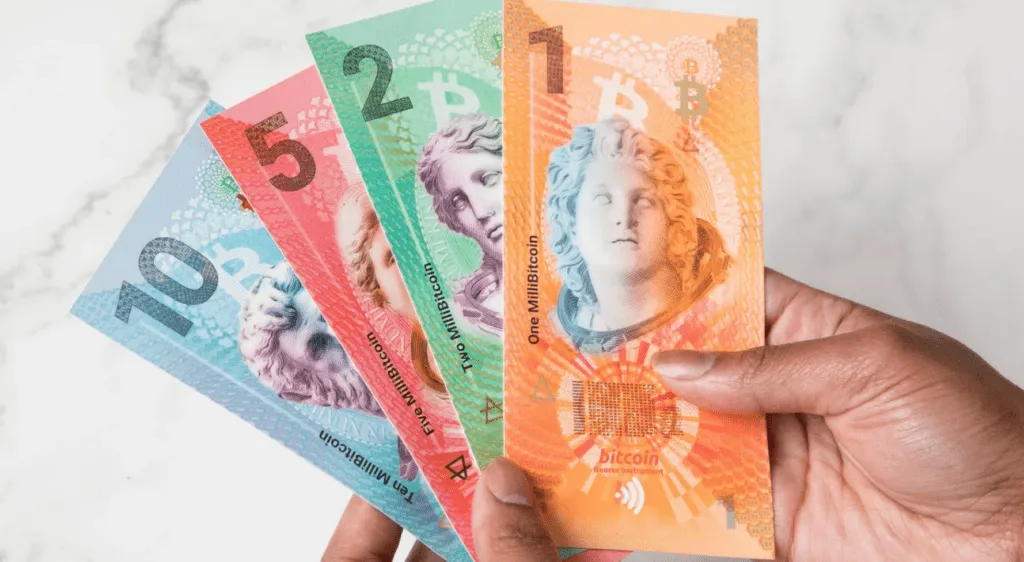
Cash-like formats are the closest to what we have today. OfflineCash The company creates a key for the user on its servers and then sends it to them. multisignature wallet. The server key is locked for a period of time, converting the multisig wallet to a single-sig wallet from which a user may withdraw their bitcoins. The idea is to circumvent the trust issue but the end result is the same as the problems with multiple mints. Their cash-like appearance is stunning.
Costs of manufacturing a Bitcoin native NTA can easily reach a couple million dollars. Implementing Bitcoin’s cryptography this way is fraught with error if the manufacturers aren’t experts in the field. The software would need to be open-source to ensure that it has no backdoors.
Another fundamental issue with Bitcoin bearer assets is that they are not physically secure. Even if you could get a cheap enough chip in a cash-like format, you would always need online access to verify its authenticity —that the cash is loaded with real bitcoin— since the asset is unavoidably digital. It is possible to solve the problem by simply relying on an issuer of Bitcoin-denominated currency and believing the value of redeemable bills. However, this would not be the best solution for self-managed, trusted money. It would probably work in friendly jurisdictions.
We are still far from having physical Bitcoins with bearer assets and secure chips, like the OfflineCash Company bills. But it would be a waste of time today since nobody has Bitcoin-denominated coins, and you end up with fiat currency.hyperbitcoinization. NVK is convinced that there are better alternatives to cash, for at least the foreseeable, future. That’s why Coinkite has created the Tapsigner.
Tapsigner

The X DNA NTAG chip is based upon the Coinkite NFC Chip, a similar technology to NXP’s X DNA NTAG, but more powerful. Tapsigner It comes in the usual debit card format, complete with secure element chip and NFC tap to Pay. There are also cool design options to select from. The chip is actually a Bitcoin wallet with the scep256k1 encryption. It can create Bitcoin keys and store them securely.
Tapsigner works as a bearer, but it is even more useful as a refillable wallet. You can use the wallet to spend bitcoin up to a certain amount, just like a credit card. The wallet enables tap to pay, which has become a popular payment method.
Cashapp Square and other major accounting and payment software are integrating with Tapsigner cards, which costs about $20.
“This article is not financial advice.”
“Always do your own research before making any type of investment.”
“ItsDailyCrypto is not responsible for any activities you perform outside ItsDailyCrypto.”
Source: bitcoinmagazine.com


