


Bitcoin sceptics claim bitcoins have no intrinsic value. Instead, they argue, investments such as real estate with tangible cashflows are preferable.
This article will dispel the myth that ‘intrinsic values’ exist and show why the cash flow of an asset has little to no impact on its ability to be a store of value.
Myth of the intrinsic value
It is incorrect to believe that objects have intrinsic value. The labor theory of values (LTV), a flawed concept that is used in Marxism, classical economics and modern economic theories to posit that value is intrinsically tied to energy, labor or output, has influenced this common belief. It misinterprets the way value is perceived within the economy. Real estate is not exempt from this belief. It’s conceived that the property has intrinsic value because of its rental income or use as a production and living space. The concept of intrinsic worth is flawed.
Value subjectivity
It’s obvious that in a free-market, where voluntary exchanges are the norm, value is subjective. The value in any transaction is subjective. Both sides believe what they get is worth more than what they lose, which indicates that it is determined by perception and not inherent qualities.
As an example, the value of a Rolex is not only a reflection on the labor that went into its creation but also heavily influenced by the scarcity it has and people’s desire to possess one. The principle of subjective evaluation is applicable to all assets. Bitcoin and real estate are no exception. Their value fluctuates according to individual perceptions.
Understanding subjectivity is key to understanding the essence of Bitcoin’s worth. It shows that, like luxury watches and real estate, its value comes from the limited supply, not the inherent properties. Carl Menger was a pioneer of Austrian School of Economics, and is arguably the inspiration for the Cypherpunks’ creation of Bitcoin. He demonstrated in the early 19th century how prices reflect subjective value.
Understanding the value of subjective evaluation is essential to understanding the benefits of bitcoin as a storage of value over real estate. Menger pointed out The value of economic products can be realized only when people realize their existence and the importance they have to them. The Subjective Theory of Value Similarities perception of beautyThe beholder’s eye is the same as the beauty standards. The value of bitcoins or properties like real estate can also vary. They are desired not because they have intrinsic value, rather due to the collective need or desire for them.
Bitcoins Value Proposition
It is not the production difficulty that makes bitcoin valuable. but from the unparalleled protection the Bitcoin network gives to the value (productivity) stored in it The network’s ability to settle final transactions. It creates a demand for bitcoin. Bitcoin is the only absolute rare commodity in our universe, other than time. The demand for bitcoin is driven by the scarcity of this network and its limited supply, deflationary schedule, indestructible character, etc.
Real Estate’s value proposition
In many real estate deals, I have seen that most investors assume that the bulk of their profits come from direct cash flows rather than price appreciation. It is important to note that this insight highlights a key point: the real estate market’s valuation has more to do about scarcity than it does about immediate cash flow. The data showing the growth in US house prices, and M2, the amount of money in circulation can confirm this.
In the chart below, which shows the average price of homes sold in the U.S.A., you can see the dramatic increase in prices for housing since 1971. The average sales price of a house in the U.S. rose from ≈$27,000 in 1971 to ≈$492,000 in the third quarter of 2023, indicating a substantial appreciation in property values over this period (≈1,700%).
This is the period that follows the Federal Reserve’s switch to a system of fiat currencies, which began on August 15, 1970 when U.S. president Richard Nixon declared the United States would stop converting the dollar in gold. Central banks around the world adopted a system of fiat currency characterized by float exchange rates, and no standard for currencies. The chart shows that the M2 money supply, as defined by Federal Reserve includes checking deposits and liquid assets which are easily convertible, such as CDs, which reflect the full scope of available funds for investment and spending, has shown a steady increase ever since the separation of the U.S. Dollar from gold. It is clear that the increase in housing prices has been closely linked to the expansion of U.S. currency.

A comparison of their compound annual growth (CAGRs) shows that there is a strong correlation between the two. The money supply (M2) has seen a compound annual growth rate of 6.9% since 1971. This is closely matched by the housing prices which have experienced a 5.7% CAGR. This is why?
Real estate has become a popular investment because of this increase in money supply.
Interest rates, housing demand dynamics, and economic growth all influence the correlation between an increase in the money supply, and rising house prices. However, in the past, periods of rapid money expansion were usually accompanied by low rates and higher borrowing. This is illustrated by the Federal Funds effective rate in the graph below.
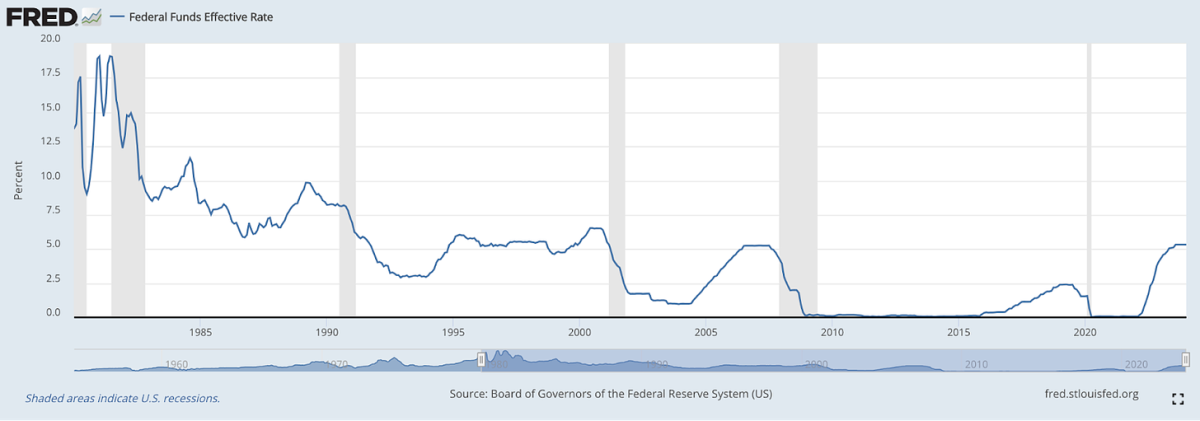
The affordability of loans increases the purchasing power of buyers and therefore, their demand for real property, especially because they are primarily acquired by loan. The surge in real estate demand is a result of this increase in demand. Recent decades have seen a worldwide trend towards an increased supply of currency and low interest rate. The historical position of the United States, as the dominant world power in the past has influenced the decision to make the dollar the global reserve currency.
While there have been exceptions, the overall trend of real estate has been positive over time. JapanA combination of an ageing population and decades of policy of low interest rates has led to a malinvestment in housing, an excess of it, and a decline in prices. Real estate is still used as a store of value only in certain metropolitan areas such as Tokyo. Globally, however, there are regional variations, and real estate has become a way to protect value from the effects of monetary growth, which have led to a decrease in purchasing power. The primary attraction of real estate in highly sought-after locations is its ability to hold value, which has been challenged now by the emergence of bitcoin.
Cash flow plays a major role in repaying loans. I’ll explore this topic in more detail in a later post.
Real Estate vs. Bitcoin
The data show that the high demand for real property is due to the monetary inflation. This has caused people to buy real estate in order to preserve their wealth. Real estate values reflect the financialization and devaluation of this asset class. This was primarily a result of the global move away from the gold standard. “Nixon shock” In 1971. Bitcoin is directly competing with real estate in its role as a value store. The digital equivalent of a physical store. As a digital store of worth, bitcoin is superior to real estate. This is because it’s rarer and more expensive to maintain. Also, bitcoin is easier to use, move, confiscate or tax.
Comparing bitcoin to real estate, as a store of value, reveals its unique benefits. This table highlights the differences, showing why bitcoin has become a strong contender for wealth preservation.
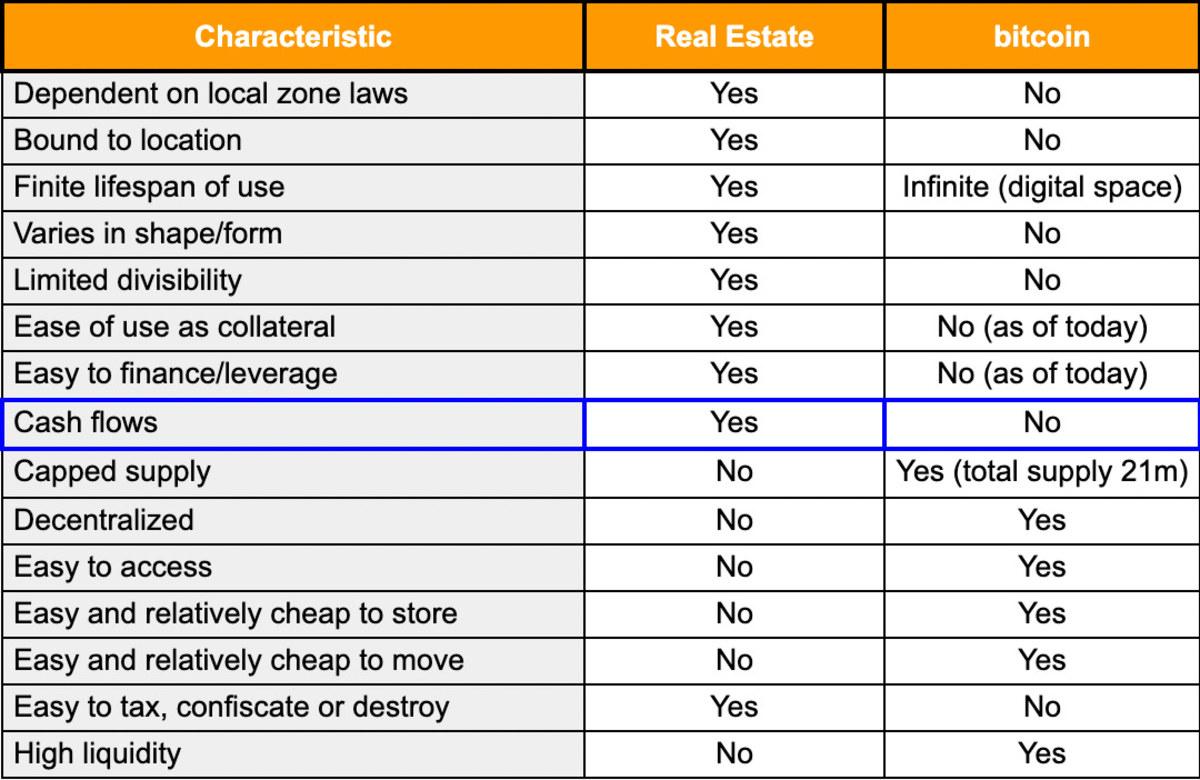
Table 2 shows that real estate is popular as an investment because of its affordability and ability to produce cash flow that makes debt repayments easier. It’s not so much for its extraordinary qualities as a value store. Since 1971, the majority of real estate is acquired through financing. In this view, real estate does not have an intrinsic (which doesn’t exist) value nor is it a great store of wealth. Statistically, it is possible to prove this.
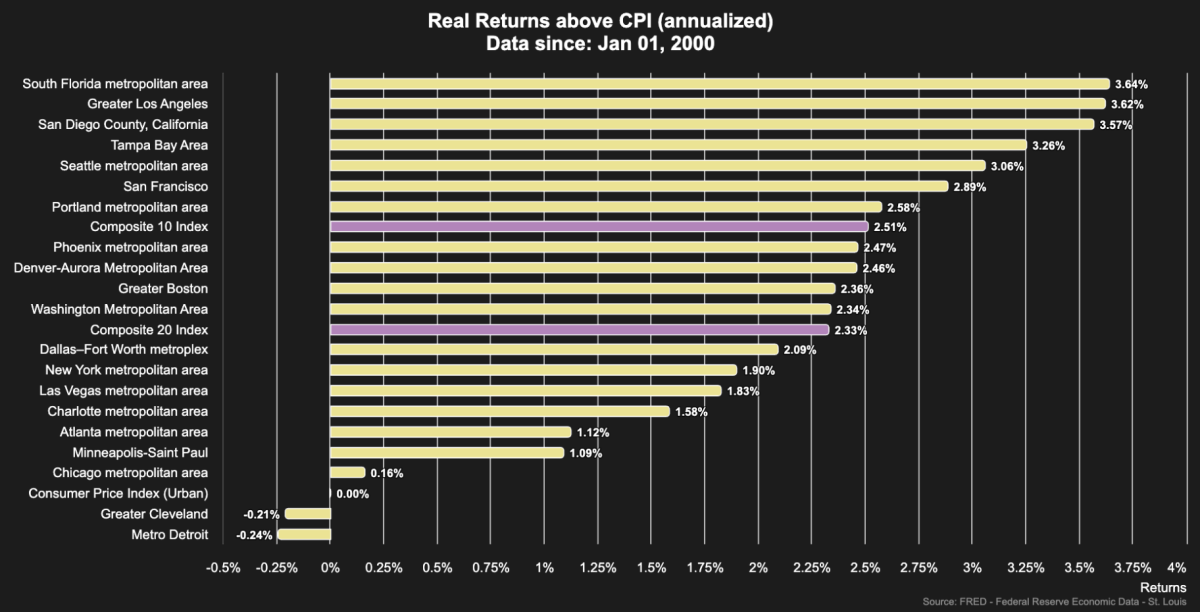
Bitcoin analyst Rapha Zagury (aka Alpha ZetaWhen adjusted for inflation (by ), the Composite Case-Shiller 20 Home Price Index (which tracks the home price in 20 major metropolitan areas of the U.S.) only rose by 2.3%. The deductions of transaction costs, taxes and maintenance fees are not taken into account. Zagury’s research found that in only a few metropolitan areas, like the South Florida Metropolitan Area and Greater Los Angeles have real estate prices outpaced inflation. The growth rates are higher by about 3.6%. Greater Cleveland, and the metropolitan area of Detroit had negative real returns when adjusted for inflation.
Bitcoin vs Fiat
The global financial system is increasingly dependent on real estate, which has become an important asset class.
The world’s largest value store (≈67% of global wealth is stored in real estateThe banks accept collateral as a form of security when they grant loans. Many jurisdictions provide more stable financial infrastructures as well as tax benefits for the purchase of real estate, which can be used to secure loans.
As bitcoin becomes a more important store of value, it is expected that its role as collateral will also improve. Store of value, and collateral to lend, are both closely related.
Why would any bank accept collateral which loses its value in the long run?
Infrastructure around bitcoin access and use of it as collateral are still at an early stage. But the possibilities are extremely promising.
Recalibrating the Cash Flow Investment Thesis on Fiat Standard
MicroStrategy Q4 2020 earnings callMichael Saylor, the Chairman of the Board of Directors of the Advisory Council on Financial Institutions (ACFI), highlighted that it is becoming increasingly difficult to generate cash flows which exceed the rate of inflation.
In the face of widespread inflation in the fiat currency system, the reliance on cash flows as an investment indicator is becoming increasingly unsustainable. The bitcoin is a unique digital rare asset with the same value-preserving qualities as real estate, but without the inherent disadvantages. This makes it an unrivaled store of value in the digital age.
Bitcoin’s value is not tied to its cash flow. This makes it resistant to inflation and the quarterly reporting of financial results. Bitcoin thrives when fiat prices are rising, because it is a better place to store capital.
Bitcoin’s value reflects capital inflows, and benefits from the increasing desire to secure wealth as fiat currencies lose their purchasing power.
A revaluation on the basis of Bitcoins for real estate
Bitcoin is resistant to physical degrading factors and regulatory changes. The value of real estate will degrade if not well maintained. Bitcoin is the most transferable form of value, because it preserves wealth. Its value increases over time if it is stored correctly, without incurring high maintenance fees. Bitcoin’s characteristics are similar to those of real estate, including being more difficult and secure, less expensive maintenance, scarcity and resilience against inflation, and the fact that it is easier and safer to store.
As a developer of real estate, I was concerned about how the digital currency bitcoin could challenge real estate’s dominance as a value store. The realization of this fact initially disturbed me. I now see how bitcoin and real-estate can be coexisting and even beneficial. thrive together.
I think bitcoin enhances the real estate industry Cash flows are protected from inflation by using real estate as a store of reliable value. This benefit extends to all industries, not just real estate. Michael Saylor says that bitcoin is the digitalization of capital. This marks a fundamental shift in value preservation across industries. Bitcoin is therefore likely to be able to command the same monetary premium as real estate. recalibrating real estate values The value of their utilities will be more closely correlated. The real estate industry and its development will still be attractive. The need to work and live in a space will never go away. From this perspective, real estate is not just an asset but a service—one that provides housing and production spaces in exchange for rental income.
Return on Investment is what Ludwig von Mises, the Austrian economist and renowned Austrian economist, called the cash flow generated by this service.originary interestThe difference is between the production cost and expected sales revenue. It is clear that bitcoin cannot match real estate as a store of value. But even though the real-estate value proposition has been altered by the advent of Bitcoin as a means of storing value, it is still possible to develop real estate in the near future, provided the new digital paradigm that Bitcoin introduces to the world of finance can be adopted. properly maneuvered.
You can also read our conclusion.
Bitcoin has changed the way we think about cash flow in investments and the intrinsic value of an investment. Bitcoin, a digital currency that is free of the restrictions of the traditional monetary system, provides a peek into the future, where the value of money will be preserved in bits, not bricks.
The lessons we learn from comparing real estate to bitcoin as we move through this new paradigm will shape the way in which the world invests, preserves wealth, and even the fabric of our global financial system. Although real estate allows you to borrow money in the foreseeable, future it is important as an investment. store of value should decline over timeWhile bitcoin is poised for success due to the fixed supply, decentralized nature and its ability to grow. increasingly preferred method for preserving wealthOffering unparalleled security and global accessibility without the constraints of traditional financial systems.
0A79 E94F A590 C7C3 3769 3689 ACC0 14EF 663C C80B
Appendix—To calculate the Compound Annual Growth Rate (CAGR) for both the Money Supply (M2) and housing prices, we used the formula:
CAGR = (Ending value/Beginning value)(1/Number Of Years)
From January 1971 through December 2023, the Money Supply (M2) is:
- The value of the beginning (Jan. 1972) is $632.9 billion
- Ending Value for Dec. 2023: $20.865 billion
- Year of Birth: 1952
CAGR=6.9532%. This is the average annual growth of total dollars over the period.
Source: Growth Money Supply (M2) St. Louis FED
Prices of housing from January 1971 until December 2023
- The value of the property in January 1971 was $ 27,300
Final Value (Dec. 2023): $ 492,300 - Year of Birth: 1952
CAGR = 5.7195%. The annualized growth rate in housing prices for the United States over this time period.
The following is a post written by Leon Wankum. The opinions expressed by the guest author are theirs alone and not those of BTC Inc. or Bitcoin Magazine.
“This article is not financial advice.”
“Always do your own research before making any type of investment.”
“ItsDailyCrypto is not responsible for any activities you perform outside ItsDailyCrypto.”
Source: bitcoinmagazine.com


