


“Ponzi scheme” has change into a byword for all method of economic frauds and financial scams. When a fast six month collapse erased $2T (trillion) from crypto market capitalization in 2022, mainstream media retailers had been fast to once more label cryptocurrencies, together with Bitcoin, Ponzi schemes.
Writing within the Chinese language Individuals’s Every day on-line version, Shan Zhiguang and He Yifan, representing the Chinese language Blockchain-based Companies Community (BSN), claimed:
Ever since Satoshi Nakamoto launched “Bitcoin: A Peer-to-Peer Electronic Cash System” in 2008, resulting in the official start of Bitcoin, the talk surrounding digital forex (Cryptocurrency) has by no means stopped for a second. [. . .] In its essence, the writer believes that digital forex is undoubtedly the most important Ponzi scheme in human historical past.
Can Bitcoin be legitimately described as a Ponzi scheme? In that case, is it actually the most important Ponzi scheme in historical past? Within the quickly growing world of tokenised assets and digital currencies, the reply shouldn’t be as simple as you would possibly assume. In reality, we’re confronted with a Bitcoin paradox.
The Origin of “Ponzi Schemes”
The Dictionary of Idiomatic English Phrases, revealed in 1891, claims that the etymological root of the the phrase “rob Peter to pay Paul,” which means to take what rightfully belongs to at least one individual to pay one other, is based in English folklore:
In 1540 the abbey church of St. Peter’s, Westminster, was superior to the dignity of a cathedral by letters patent; however ten years later it was joined to the diocese of London once more, and plenty of of its estates appropriated to the repairs of St. Paul’s Cathedral.
There’s some dispute and proof suggesting “rob Peter to pay Paul” was in widespread utilization earlier than the sixteenth century. Later dictionary definitions specify that the phrase means “transferring money from one group of people or place to another, rather than providing extra money.”
If we apply this to financial institution deposits, that are financial institution liabilities, then financial institution borrowing represents a variation of the method. We may rephrase it “use the debt owed to Peter to lend to Paul.” If we then think about a fractional reserve banking system, and the chance that Paul’ cash may also be banked, then the entire deposit, lending and debt creation process—we name it the fiat financial system—starts to look distinctly fishy.
The thought of taking cash from some to pay others, has enabled many frauds and scams over the centuries. If the possible victims could be inspired to forgo pecuniary warning, then the fraudsters are on to a winner. Offering their fraud is not uncovered and they do not get caught.
Sarah Howe opened the Ladies’ Deposit Company in 1879. Working out of Boston, Howe provided her completely feminine clientele an attractive 8% month-to-month compound curiosity, promising to return $96 revenue on an preliminary $100 deposit within the first yr.
In a extremely misogynistic society, the place ladies’s entry to finance and banking was restricted, Howe pitched her banking enterprise by interesting to ladies’s sense of injustice. Claiming efficient charity standing, she informed unsuspecting depositors that she was bankrolled by rich Quakers and their deposits had been secure. None of this was true.
Nobody was masking Howe’s operation. She was paying dividends to early traders straight from the deposits she had taken from her different prospects. Howe’s fraud was uncovered and many of the ladies who believed her, and within the trigger she claimed to assist, both misplaced their financial savings or a substantial proportion of them.
Howe served a 3 yr sentence and, upon her launch, embarked upon virtually the identical rip-off once more earlier than being imprisoned a second time. Howe’s favoured fraud would later change into generally known as a “Ponzi scheme.”
The Ponzi Scheme Takes Form
Lower than 20 years after Howe’s downfall, in 1898, William Miller, who grew to become recognized to many as “520% Miller,” began an funding scheme that promised traders an enormous proportion return on their preliminary deposit. Aged simply 21, by all accounts, Miller was a poverty stricken workplace clerk with a younger household to feed. Having failed miserably in his white collar profession and with no notable blue collar expertise, Miller turned to the one factor he thought he may generate profits from: finance.
Miller usually frequented “bucket shops” the place these on decrease incomes would successfully guess on exercise within the inventory and commodity markets. Whereas, in actuality, no shares or commodities had been exchanged, as a “bucketeer,” Miller studied market type like racing fans research horses. Miller was hopeless at this too and usually misplaced his meagre earnings within the bucket retailers.
Miller in some way ingratiated himself among the many flock of the Christian Endeavor Society of the Tompkins Avenue Congregational Church. He first satisfied Oscar Bergstrom and two different churchgoers to take a position, what was then, the not inconsiderable quantity of $10 every into his insane monetary proposition. Promising them a ten% weekly dividend—an annual return of 520%—Miller satisfied his victims that he was such an astute investor, he couldn’t solely indemnify their preliminary funding however present them simple riches in return.
In the event that they reinvested their weekly dividend, Miller was providing them compound curiosity that will in the end present a windfall of $1,420, for his or her preliminary $10 deposit, within the first yr. Anybody who understood both markets or finance would have rapidly realised this was a fairly ludicrous proposal. It appears Miller preyed upon folks with a really restricted grasp of finance. That is widespread function of almost all Ponzi schemes.
Miller’s scheme took off as a result of he seemingly delivered. His early depositors made the returns he promised. Inside months, Miller’s magic cash making machine had change into the speak of Brooklyn, then New York and shortly all the United States. Naming his rip-off “the Franklin Syndicate,” the cash poured in from throughout the nation.
Sadly, for many of his traders, it was all a ruse. Miller was paying dividends and money outs from the cash he had collected from each different investor. His gambit was to hedge that not all of his traders would money out on the identical time. Whereas they did not, offering withdrawals remained comparatively low, he may cowl the funds. You could have noticed that Miller’s scheme was not dissimilar to fractional reserve banking on this regard.
Whereas the Syndicate made some investments, there was no underlying portfolio that would even remotely cowl any type of run on Miller’s operation. His total scheme was primarily based upon perpetual and important deposit development. A decelerate of incoming traders would go away Miller with an unsolvable liquidity disaster. The Franklin Syndicate was a fraud.
When this was uncovered within the press, Miller fled to Canada earlier than being arrested and extradited again to the US. Regardless of a protracted authorized dispute, involving profitable appeals, which had been then reversed, and a dizzying array of accusation and counter-accusation among the many rip-off’s protagonists, Miller, who was additionally nicknamed the “the Boy Napoleon of Finance,” was nonetheless imprisoned in Sing Sing jail. Upon his launch, Miller went straight and garnered one more moniker: “Honest Bill.”
Whereas it appears extremely probably, it is not completely clear if Carlo Pietro Ponzi, higher generally known as Charles Ponzi, was aware of both Howe’s or Miller’s scams. What could be mentioned is that he emulated their mannequin of economic fraud and took it to new heights. Consequently, he’ll eternally be remembered for his “Ponzi scheme.”

Born in Lugo, Italy, in 1882, Ponzi arrived virtually penniless in Boston in 1903. By the point he embarked upon his Ponzi scheme, he had already been convicted for fraud, in Canada and, what we’d immediately name, “people smuggling” within the US.
As a younger man in Italy, Ponzi labored for the postal service. This maybe influenced his resolution to initially launch a completely authorized arbitrage enterprise.
Ponzi reportedly obtained a letter from Spain with an “international reply coupon” (IRC) included. Ponzi famous that the IRC worth paid in Spain was significantly lower than the face worth of the US stamp he may buy with the it. He set about exploiting the worldwide worth distinction for authentic revenue by promoting overseas IRC bought US stamps to US prospects. Ponzi established “the Securities Exchange Company” for his enterprise.
Whereas theoretically viable, Ponzi’s arbitrage revenue margins relied upon him undercutting the US submit workplace. His potential prospects may purchase the stamps virtually in every single place and had no inducement to purchase from him in any other case.
His margins had been additional restricted by unfavourable fluctuation in trade charges, promoting prices, supply and provide prices and he required important commerce quantity to supply himself with any type of substantial earnings. In different phrases, if he was going to earn a dwelling from his concept, arduous work was essential. Evidently, this wasn’t one thing Ponzi was too eager on and his ambitions went far past operating a small enterprise.
Not like Miller, who merely claimed he was a monetary wizard, Ponzi recognised that he may lend some authenticity to his fraud by basing it upon, what no less than seemed to be, a believable enterprise concept. Ponzi determined to make up some wild, unfounded claims concerning the success of his worldwide arbitrage operation and targeted upon attracting as many traders as attainable.
Claiming the necessity to preserve aggressive benefit, Ponzi mentioned he could not disclose the exact particulars of his methodology. A broad define of his marketing strategy was enough to persuade a throng of traders. He provided them a 50% revenue, first inside 90 days after which later, to extend the tempo of incoming deposits, inside 45 days.
Ponzi’s scheme was, in all different respects, equivalent to Miller’s and Howe’s. Funds had been made as promised to early traders from the deposits hoovered up from all of the others. Wholesome dividends paid to a minority satisfied the bulk to reinvest and by no means money out, thus enabling Ponzi to quickly develop. Taking the majority of his positive factors for himself, Ponzi knew the place the true cash lay and so sought to purchase a controlling curiosity in a financial institution.
Ponzi focused the Hanover Belief financial institution which had turned down his $2000 enterprise mortgage request solely a yr earlier. As soon as the fraud was lastly reported by the press, in the summertime of 1920, his “Ponzi scheme” collapsed briefly order. Charles Ponzi’s publicity elicited a terminal run on Hanover Belief which additionally held a $125,000 deposit from the Commonwealth of Massachusetts, resulting in the resignation of State Treasurer Fred Burrell.
Ponzi’s inexorable march in direction of one other jail sentence in all probability wasn’t helped when “520% Miller” was quoted by the New York Instances, simply days earlier than the whole implosion of Ponzi’s firm, saying:
I could also be moderately dense, however I can’t perceive how Ponzi made a lot cash in so quick a time.
Ponzi confronted two federal indictments on a complete of 86 counts of mail fraud. He served three and half years of 5 yr time period earlier than being re-indicted for larceny by Massachusetts state prosecutors shortly after his launch. Ponzi sued, claiming this was a breach of the plea discount he had made with federal prosecutors. The efficient “double jeopardy” argumentation went all the way in which to the Supreme Court docket and Ponzi misplaced. In between his intervals of subsequent incarceration, there have been appeals, stints on the run, assumed faux identities, further Ponzi schemes and different frauds. Finally Ponzi was deported again to Italy in 1934.
Ponzi was a flamboyant character who, regardless of his crimes, loved some remaining widespread assist which dwindled as his authorized disputes dragged on. However his Ponzi schemes and frauds weren’t victimless. Many individuals, particularly within the Boston Italian group, misplaced their life financial savings to Ponzi. Whereas accounts fluctuate, the entire estimated losses of the primary named “Ponzi scheme” had been between $15M – $20M. Equal to between $231M – £308M immediately.
Ponzi’s spouse, Rose Gnecco, stayed loyal to him all through his undoing. When he was lastly deported to Italy, Ponzi had reportedly swindled Rose and her household out of $16,000.
Allegedly the Largest Ponzi Scheme In Historical past
In 2021, claiming Bitcoin was a Ponzi, the Brazilian pc scientist, Jorge Stolfi, outlined the 5 major traits of a Ponzi scheme.
Individuals make investments right into a Ponzi scheme primarily as a result of they count on good income, and:
- that expectation is sustained by such income being paid to those that select to money out. Nonetheless,
- there isn’t a exterior income for these payoffs. As a substitute,
- the payoffs come completely from new funding cash, whereas
- the operators take away a big portion of this cash.
Ponzi schemes are at all times too good to be true. A modicum of due diligence ought to deter these cautious sufficient to train some. No matter Stolfi’s arguments about Bitcoin—we’ll study them in additional element shortly—in order for a Ponzi scheme to succeed, along with a level of economic gullibility, the investor falls prey to the fraudster as a result of they “expect good profits.”
So whereas there are victims, the people who lose their shirts aren’t completely “blameless.” They exhibit what former US Federal Reserve Chairman Alan Greenspan called “irrational exuberance.” Clearly, this by no means exonerates the fraudster.
That did not cease Bernie Madoff—perhaps essentially the most infamous exponent of the Ponzi scheme aside from Ponzi himself—from levelling the accusation of greed at his victims. In March 2009, Madoff pleaded responsible to 11 federal costs, together with cash laundering and securities fraud, and was sentenced to 150 years. He died in jail in 2021, aged 82.
Following his conviction, Madoff’s household suffered a string of tragedies. In 2010, Bernie’s son Mark dedicated suicide. In 2014 his different son, Andrew, died from a really uncommon type of most cancers and, in 2022, Bernie’s aged sister, Sondra Wiener, and her husband Marvin each died in an obvious murder-suicide.
It’s steadily said that Madoff operated the most important Ponzi scheme in historical past. For motive’s we’re about to debate, that declare is doubtful.
Madoff served as Nasdaq’s chairman in 1990, 1991 and 1993, and was arrested in 2008. By then his Ponzi scheme had been operating for no less than 20 years and prosecutors estimated the size of his fraud, primarily based upon 4,800 recognized shopper accounts, to be $65B. The whole misplaced precept was lastly estimated at $19.4B. Unusually, for a collapsed Ponzi Scheme, nearly $15B of the precept has been recovered for some traders.
The US Securities Investor Safety Company (SIPC) protects traders towards losses to fraud, however provided that they unwittingly invested straight within the rip-off. Sadly, 80% Madoff’s Ponzi scheme victims got here from “feeder funds” or funding swimming pools and had been deemed third events. As such, lots of the comparatively small traders had been not eligible for SIPC protection. Bigger depositors, resembling institutional traders, had been comparatively properly protected and have retrieved most of their funding, although not their income.
Those that withdrew greater than they put in—net winners—were required to repay the distinction. This left the overwhelming majority of Madoff’s small-time victims scrabbling to file civil motion lawsuits to attempt to recoup misplaced financial savings. Typically they had been attempting to entry the safety fund repaid to the US State by the very swimming pools they’d invested by way of. The massive feeder funds themselves had been largely lined by the SIPC.
Whereas Madoff maintained he was solely accountable, clearly such a monumental Ponzi scheme involved many players. In subsequent years, a number of confronted punishment. For instance, Frank DiPascali, Madoff’s chief monetary officer and Madoff’s secretary, Annette Bongiorno, alongside his operations supervisor, Daniel Bonventre and accounts manger, Joann Crupi, all served time after associated prosecutions. Others had been extra lucky, financially talking.
The investor Jeffrey Picower had grabbed an estimated $7.2B from the Ponzi scheme. As with so many others carefully associated to Madoff’ fraud, he died unexpectedly shortly after Madoff’s conviction. Whereas his widow was subsequently compelled to forfeit the cash, Picower actually benefited in his personal lifetime.
Stanley Chais funnelled his purchasers investments into the Ponzi scheme for many years. Taking an estimated $1B in income, the celebrated Israeli philanthropist lastly settled a “profit” reimbursement of $277M.
Norman Levy had been investing within the Ponzi scheme because the Nineteen Seventies. His property settled for $220M in 2010. Given the prolonged interval of his involvement, this additionally looks as if a moderately beneficial final result.
Madoff started his scheme with seed cash from clothes entrepreneur Carl Shapiro. Shapiro had been investing with Madoff for 40 years and made a $250M funding solely weeks earlier than the rip-off detonated. Shapiro paid again $625M in whole. Picower, Chais, Levy and Shapiro ultimately grew to become generally known as “the Big Four.” Comparatively talking, their “losses,” if they’d any, appeared extra bearable than most.
Madoff based the Wall Road agency Bernard L. Madoff Funding Securities LLC (BMIS) in 1960. Like Ponzi, Madoff’s distinctive promoting proposition (USP) did not seem too outlandish. He went additional than different Ponzi operators to scrupulously preserve plausibility. He gave his rip-off an air of exclusivity, initially declining would-be traders. He additionally cultivated his picture as a reliable philanthropist, donating generously to worthy causes and did not provide clearly ridiculous returns.
Claiming that he used a split-strike conversion, or collar, funding technique, Madoff satisfied potential purchasers that by buying each out-of-the-money (OTM) ‘put’ choices and promoting ‘name’ choices (lined calls) he may guarantee a gradual, low threat 20% annual return on funding (ROI).
If the inventory worth in Madoff’s portfolio dropped, the bought put possibility, forcing a sale on the subsequent above market strike worth, would mitigate any losses. If the value rose above the lined name strike worth, Madoff’s name possibility consumers would train their proper to purchase his shares.
Whereas this may restrict income to the strike worth of the lined name, the premium from promoting the decision choices would additionally fund the acquisition value of the places. Even for these with some grasp of market finance, all of it appeared so plausible.

SEC Disinterest
Not like Howe, Miller and Ponzi, Madoff didn’t promise on the spot riches or make conspicuously exorbitant claims. This undoubtedly contributed to the longevity of his grift, however it wasn’t the one motive he sustained the so-called “largest Ponzi scheme in history” for greater than 20 years.
Sixteen years earlier than Madoff’s flimflam was uncovered, the Wall Street Journal (WSJ) reported the US Securities and Change Fee’s (SEC’s) investigation of a Florida funding pool, run by the accountants Frank J. Avellino and Michael S. Bienes. The pair had been suspected of swindling $440 million out of the Florida group by way of their A&B buying and selling enterprise.
However when the court docket appointed auditors checked A&B’s books, the cash, no less than, was all in place. Technically, the pair did not seem like defrauding anybody. Frank and Michael had been taking a profit—effectively a considerable dealing with fee—after outsourcing their funding technique to a cash supervisor. That dealer was Bernie Madoff.
Madoff had pioneered digital buying and selling, calling it “artificial intelligence.” In 1992, because the SEC had been investigating A&B, BMIS may execute trades quicker and cheaper than anybody else. Consequently, BMIS’ every day commerce quantity was round $740M, representing 9% of all exercise on the New York Inventory trade. Regardless of a few years through the Nineteen Eighties, when market volatility left cash mangers struggling to even match the turbulent efficiency of the S&P 500 index, BMIS had been seemingly at all times in a position to beat it by some margin.
When the WSJ quizzed Madoff about A&B’s pool, he revealed that he had been working his split-strike and related methods, resembling convertible arbitrage, because the late 1970’s. In hindsight, suggesting one thing nearer to a 40 yr Ponzi scheme.
A&B’s mistake was not registering the trades with the SEC. Had they carried out so, then Madoff would essentially have been listed as their dealer. The SEC accused Frank and Michael of operating “an unregistered investment company [that] engaged in the unlawful sale of unregistered securities.” Talking about A&B, Madoff reportedly mentioned “he didn’t know the money he was managing had been raised illegally.” Everybody appeared pleased to simply accept him at his phrase.
For some motive, regardless of a prolonged investigation and court docket orders compelling the A&B to return traders’ cash, neither A&B’s legal professionals nor the SEC named Madoff. It was the WSJ that reported the identification of A&B’s mysterious cash man. Apparently, the revelation did not even vaguely pique the SEC’s curiosity in BMIS.
Paradoxically—perhaps having learn the WSJ article—following the closure of A&B, and now realizing who the duo’s dealer was, almost all of A&B’s purchasers reinvested their money in BMIS’ split-strike wheeze. As did Frank Avellino and Michael Bienes.
Madoff’s Ponzi scheme had a greater USP than any earlier than it. It was a complete charade nonetheless. Madoff was following the Ponzi methodology exactly.
He Madoff was merely depositing his traders cash in his account held by Chase Manhattan Financial institution—later merging into JP Morgan Chase & Co—and paying shopper redemptions from these funds. The impression of the Ponzi scheme’s collapse was devastating for some, however not everybody. At its peak, Madoff’s account held $5.5B.
The split-strike conversion is a wonderfully authentic method to funding. It is usually a conservative, long run funding technique unlikely to ship an annual 20% ROI. Within the 1992 WSJ article, the journalists questioned Madoff concerning the obvious resounding success of BMIS:
[Madoff] insists the returns had been actually nothing particular, provided that the Commonplace & Poor’s 500-stock index generated a mean annual return of 16.3% between November 1982 and November 1992. “I would be surprised if anybody thought that matching the S&P over 10 years was anything outstanding,” he says.
This was principally misinformation. Madoff’s claimed split-strike methodology did not clarify how he achieved such startling outcomes. There is no such thing as a proof that the regulators, the supposed specialists in monetary fraud, had been in in the least sceptical. Quite the opposite, they seemed to be going to some lengths to keep away from investigating Madoff.
SEC Failure?
The 2008 monetary crash was the principle contributory factor for the collapse of BMIS. Like all Ponzi schemes, perpetual development was a prerequisite. When depositors in search of safer havens cashed out, Madoff’s reportedly confronted a $7B liquidity disaster with no hope of resolving it.
Madoff confessed to his sons, who had been allegedly shocked by the invention, they usually turned their very own father in after in search of authorized recommendation. Madoff took a plea deal, supposedly to spare his household additional ache. Sadly, that did not pan out either.
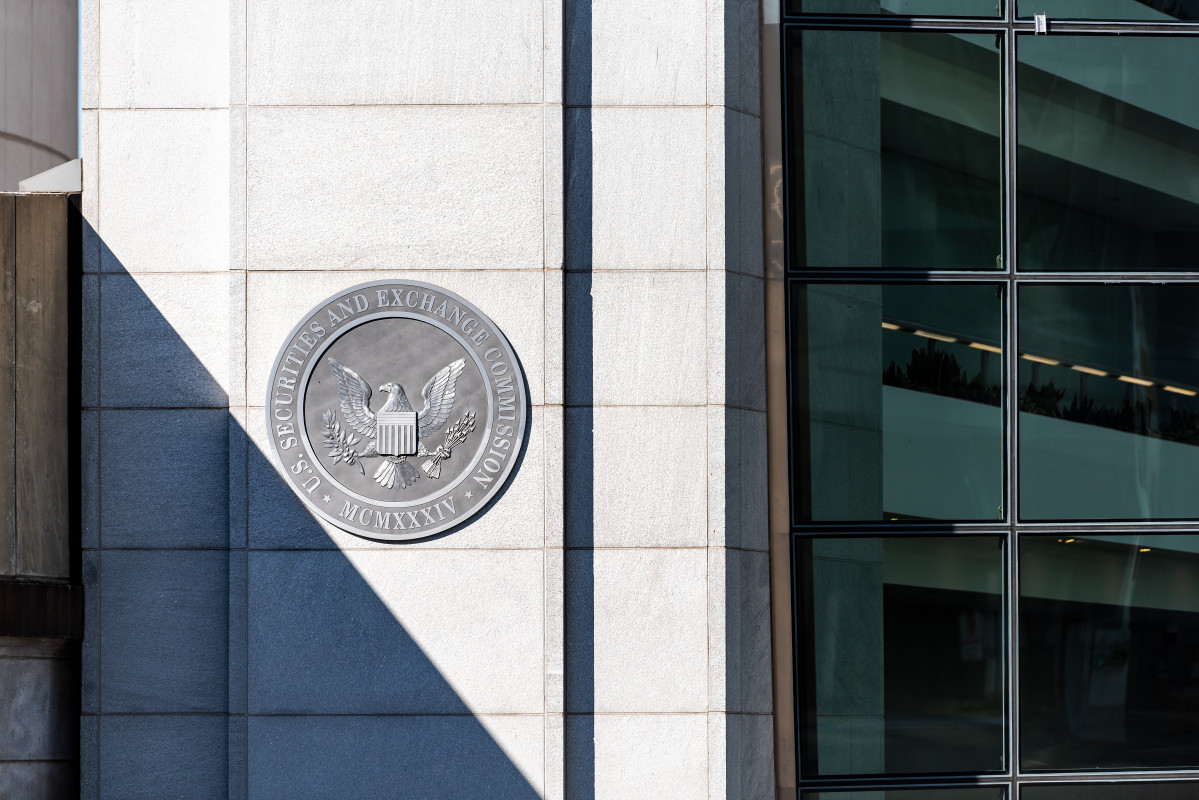
The SEC did not take any severe curiosity in BMIS till 2008. The 2009 Office of Inspector General (OIG) report into the string of SEC “failures” to research discovered nothing untoward.
The truth that SEC Assistant Director Eric Swanson was carefully linked to the Madoff family—in a relationship with Bernie’s niece—was not deemed suspicious. Shana Madoff simply occurred to be Madoff’s chief compliance officer. Having met in 2003, she and Swanson married in 2007.
Going again to the A&B investigation, between 1992 and 2008, the SEC obtained six “substantive complaints” and had learn two media articles from “reputable publications,”—the WSJ’s piece being one in all them—that raised some “red flags” with regard to “Madoff’s unusually consistent returns.”
Figuring out that, all through the sixteen yr interval of “red flags,” the SEC “never took the necessary and basic steps to determine if Madoff was misrepresenting his trading” and that “the SEC could have uncovered the Ponzi scheme well before Madoff confessed,” the OIG discovered no proof of any wrongdoing.
Apparently, it was all because of the SEC trusting no matter Madoff informed them. The involvement of too many “inexperienced personnel”—who had been presumably clueless—was reportedly an issue. A common lack of planning and, as is monotonously standard for this sort of inside investigation, a “systematic breakdown” for which no “senior-level officials” held any kind of accountability, all contributed to SEC alleged “failure”.
Remarkably, the OIG said:
The SEC examiners and investigator failed to know the complexities of Madoff’s buying and selling and the significance of verifying his returns with unbiased third-parties.
Which moderately begs the query what the SEC supposedly does if it may well’t “understand the complexities” of economic market buying and selling. However are there some other the explanation why the SEC could have been averse to upending BMIS?
A Very Helpful Ponzi Scheme
BMIS was a serious third market buying and selling supplier. It was performing as a “market maker,” offering liquidity to finance the over-the-counter (OTC) commerce in securities between giant institutional traders. Whereas these securities are “exchange-listed” they don’t seem to be traded by way of the massive inventory exchanges, such because the New York Inventory Change.
The third market offers a stage of anonymity and excludes some public data usually required for buying and selling on the foremost exchanges. It’s the place huge institutional traders go to to conduct fast enterprise, sometimes shopping for and promoting giant blocks of firm shares. They use the third marketplace for their very own profit, moderately than performing on a purchasers behalf.
BMIS was one of the largest, many say “the” largest, market maker on Wall Road. As such, BMIS would possibly, for instance, purchase a big block of shares off a serious investor for money. Thus enabling giant institutional traders to rapidly liquidate important inventory holdings, without having to finalise a purchaser.
As famous by the Dubai bases funding “incubator,” FasterCapital:
Third market makers play an important function in enhancing market liquidity by offering a continuing stream of purchase and promote orders. Their presence ensures that there’s at all times a counterparty obtainable for merchants, whatever the prevailing market circumstances. [. . .] By doing so, they assist stabilize the market and be sure that buying and selling can proceed even in turbulent occasions.
Madoff’s Ponzi Scheme was a significant supply of liquidity for international monetary markets.
Apparently, this had nothing to do with the SEC’s peculiar Madoff blind-spot. We’re requested to consider that US regulators had been oblivious to an unlimited Ponzi scheme run by one in all Wall Streets main companies for greater than 20 years. BMIS key function in shoring up unsteady international markets had nothing to do with it, or so we’re informed.
When all of it got here crashing down, Bernie Madoff’s $7B liquidity entice was nothing in contrast the outlet the remainder of the monetary system discovered itself in.
Genuinely The Largest Ponzi Schemes In Historical past
When researchers from the College of Louisiana at Lafayette appeared into Madoff’s Ponzi scheme checking account, they reported:
Assuming that the deposits returned the financial institution’s web curiosity margin and grew at a random geometric charge, this paper estimates that JP Morgan Chase generated $435 million in after-tax income from this very giant account over the course of sixteen years.
Finally, JP Morgan Chase & Co (JPMC) agreed to pay the US authorities a $2.6B settlement—for a deferred prosecution agreement—and admitted “negligence.” Subsequently, JPMC had been ready to withstand a lawsuit from the “net winners” of Madoff’s schemes who accused JP Morgan of direct complicity.
The Decide cited JPMC’s admitted negligence in his ruling, observing that negligence didn’t quantity to fraud. The traders not lined by the SPIC misplaced once more. Like everybody else with oversight of Madoff’s actions, JPMC maintained it did not have a clue, though conceded it may have been extra diligent.
For main industrial banks like JPMC $2.6B is not hen feed, however neither is it again breaking. Instantly, following the 2008 monetary crash, brought on by the wild hypothesis within the monetary derivatives market, the US authorities agreed to inject $250B of capital into the industrial banks. This was along with the $700B buy of the banks junk belongings and a senior debt underwriting package deal price $1.5T (trillion), together with $500B deposit assurance for enterprise accounts. This amounted to an preliminary $2.45T financial institution rescue mission within the US alone.
We’ll keep targeted on the US right here, however we should not neglect that what occurred within the US was emulated in many countries. The story behind the worldwide 2007/8 crash is well-known however price briefly reiterating.
Mortgage Backed Securities (MBS) are securities traded within the derivatives market. An MBS is a fixed-income safety primarily based upon the curiosity funds due on the pooled mortgages it comprises. The underlying asset of an MBS is the collected bundle of mortgage agreements.
The early to mid-2000s noticed fast property worth rises within the US. Mixed with plummeting Fed’ Fund rates of interest, that stayed relatively low till mid decade, the industrial banks had been throwing cash at anybody who claimed they may afford to make the repayments. This included lending to the subprime market catering for folks with low credit score scores. Typically these had been curiosity solely mortgages and never simply family mortgages both. Colaterall loans on industrial, industrial and agricultural property had been typically pooled with residential mortgages in MBS.
Subprime lending to accommodate consumers, setting greater mortgage charges, was particularly lucrative. If the debtors defaulted, the banks may repossess, make the household homeless, and sit on tidy property portfolios. So long as the housing market remained buoyant.
The minimally regulated funding banks had been working hedge funds, buying and selling MBS and different securities within the derivatives markets. Thus, as industrial banks additionally operated funding arms, they had been rising demand for their very own mortgage lending. They had been inflating the housing bubble and stimulating their very own excessive threat, subprime lending.
The rankings companies, who’ve a battle of curiosity as a result of they’re paid by the banks, gave almost all of the MBS triple ‘A’ (AAA) rankings, together with MBS filled with subprime mortgages. Consequently institutional traders had been wanting to commerce the supposedly secure “residential mortgage backed securities” (RMBS).
This commerce was once more fuelled by the industrial banks who continued to imprudently bathe low-cost cash on traders enthusiastically speculating with MBS. Commerce was carried out over-the-counter (OTC), ably assisted by, amongst others, Bernie Madoff, who provided institutional traders further liquidity at any time when they needed to pounce on an MBS alternative.
To complicate issues, different monetary derivatives, primarily based solely or largely upon MBS, resembling Collateralized Mortgage Obligations (CMOs) and Collateralized Debt Obligations (CDOs), had been additionally being liberally traded.
Stoking issues additional, the industrial banks had been promoting Credit Default Swaps (CDS), to mitigate potential MBS dangers, for years. CDS consumers usually pay a daily premium to the vendor in trade for a purchase order settlement of the safety and curiosity due, if a “credit event” happens. A “credit event” for an MBS could be triggered if the mortgage holders defaulted.
What’s extra, the CDS are additionally derivatives that may be traded. Many institutional MBS traders purchased CDS from industrial banks, or different sellers, then resold the CDS to different traders for marginal revenue within the derivatives market. The CDS mannequin of insurance coverage cowl for MBS hypothesis inspired the rankings companies to subject AAAs on MBS with very restricted scrutiny of the underlying belongings; the subprime mortgages.
So immense was subsequent by-product buying and selling in CDS, by 2007, CDS constituted the most important single asset pool on this planet. The estimated international CDS pool worth was $62.2T. What occurred subsequent would wipe $35.9T of CDS “value” off the monetary markets in two years.
Beginning in 2004, the Fed Fund charge started to rise. This corresponded with the tip of many subprime debtors preliminary mortgage agreements. As they appeared to remortgage they could not meet the brand new charges and mortgage delinquency, defaults, repossessions and family debt rose sharply. The US housing bubble popped, leading to widespread financial ache and years of austerity.
As with the demise of Madoff’s Ponzi scheme, some traders fared markedly higher than others. As standard, it was the small time depositors, householders and the general public who bore the brunt of the monetary distress.
In all chance, the precursor to a world monetary collapse wasn’t as dangerous as many feared. Subprime mortgages had been the underlying belongings in a comparatively small proportion of MBS. The true drawback, as soon as once more, was the “complexity” within the derivatives market.
The 2011 US authorities Monetary Disaster Inquiry Report noted:
OTC derivatives quickly spiralled uncontrolled and out of sight, rising to $673T in notional quantity. [. . .] OTC derivatives contributed to the disaster in three important methods. First, one sort of by-product—credit score default swaps (CDS)—fuelled the mortgage securitization pipeline. CDS had been bought to traders to guard towards the default or decline in worth of mortgage-related securities backed by dangerous loans. [. . .] [W]hen the housing bubble popped and disaster adopted, derivatives had been within the middle of the storm. [. . .] [M]illions of derivatives contracts of all sorts between systemically necessary monetary establishments—unseen and unknown on this unregulated market—added to uncertainty and escalated panic.
When the music stopped, the interweaving community of MBS, CMOs, CDOs and CBS, mixed with the relative anonymity of OTC buying and selling, left traders, banks and regulators alike, unable to determine the place the publicity lay. Nobody may determine who was holding junk bonds and who wasn’t. Consequently, as demand merely stopped, the funding banks had been left holding mountains of poisonous belongings.
Whereas the explanation to panic was maybe not as acute as assumed, panic ensued nonetheless. The worldwide derivatives market is sort of completely dependent upon investor confidence. With out it, no matter their notional worth, the multitude of MBS associated monetary devices had been comparatively nugatory. Taking the knock-on monetary impacts under consideration, the ultimate value of all this, simply to the US financial system, was virtually incalculable.
In accordance with Harvard Enterprise Evaluate, in 2018 an inexpensive whole loss estimate was someplace within the area of $4.6T. As conservatively estimated by the Federal Reserve, this successfully meant that each US citizen paid $70,000 into the derivatives rip-off. The price of the financial institution bailouts alone pressured each US taxpaying citizen to change into an “investor,” whether or not they needed to be one or not.
So let’s evaluation how a very gargantuan Ponzi scheme operates.
If carried out with any aplomb, the USP appears believable. This attracts a mess of traders who assume they’re investing in an actual monetary plan. In actuality, the underlying belongings are junk and they’re really receiving funds from everybody else “invested” within the scheme.
That’s precisely how the 2008, derivatives market monetary rip-off performed out. So no, Bernie Madoff’s Ponzi scheme wasn’t even near being “the largest Ponzi scheme in history.” It was a bit participant within the colossal international monetary fraud that dwarfed it.
However this nonetheless wasn’t the most important Ponzi scheme in historical past.
As famous within the 2011 Disaster report, in 2008 the notional quantity of “money” invested in OTC derivatives was $673T. US GDP in 2008 was round $14.5T. World GDP in the identical yr was about $61T. How may something on the planet have a notional “monetary” worth greater than ten occasions bigger than the financial worth of all the productive financial system of the Earth?
The reply is that the worldwide fiat forex financial system is the mom of all Ponzi schemes.
All of us, spend money on it with our labour. However there isn’t a intrinsic worth underpinning that forex. Thus, its provide can develop with out restrict, making is seemingly attainable to notionally worth a tranche of derivatives far past the worth of all the international financial system.
By way of such mechanisms as inflation, the early traders, those that first seize the issuance of latest “money”—the industrial banks—cash out due to a transfer of wealth from all of us, to them.
As demonstrated by Professor Richard Werner in his 2014 paper titled “Can Banks Individually Create Money Out of Nothing,” banks create fiat forex from nowhere whenever they make a loan.
Some will argue that fractional reserve banking limits this course of. The issue with that is that central banks create reserves in precisely the identical method. For instance, in keeping with the Financial institution of England (BoE), Quantitative Easing (QE)—which pushed the global money supply to actually climb off the charts—operates as follows:
Quantitative easing includes us creating digital cash [. . .] to purchase issues like authorities debt within the type of bonds […] By creating this ‘new’ cash, we intention to spice up spending and funding within the financial system.
This new “digital money” did not exist till the central financial institution made it seem with a wave of its monetary wand. Simply because the industrial banks conjure broad cash from nothing, the central banks create the identical “fairy dust”—as Werner referred to as it—when they magic reserves, or base cash, out of the ether.
The BoE provides that in addition they “use this new money to buy bonds from the private sector.” Imagining cash into existence concurrently creates reciprocal debt. The BoE provides an instance of how this mythological monetary system operates:
Suppose we purchase £1 million of presidency bonds [with fairy dust] from a pension fund. Rather than the bonds, the pension fund now has £1 million in cash. Somewhat than maintain on to this cash, it’d make investments it in monetary belongings, resembling shares, that give it a better return. And when demand for monetary belongings is excessive, with extra folks wanting to purchase them, the worth of those belongings will increase.
Asset “value” actually elevated previous to the collapse of the 2008 international Ponzi scheme. Not solely was the assumed worth speculative, to the purpose of being baseless, the purchases had been made with “fairy dust.”
All of this manufactured debt and the income {that a} choose few glean from it, is in the end paid by us, the taxpayers. We’re the unwitting traders. As savers, small companies and dealing households lose buying energy, family debt accrues. Aided by ever escalating national debt ceilings, the institutional traders and the banks, as industry partners of presidency, simply preserve going.
There’s nothing “real” concerning the international financial system Ponzi scheme. Whereas provide and demand, and fundamental financial rules like “value,” nonetheless apply, the monetary system outstripped the “real economy” and headed off to Neverland half a century in the past.
Following the 2008 monetary crash—they largely caused—the industrial banks continued to plough their taxpayer underwritten fairy mud into the derivatives market. Producing ever extra nymph-fuelled debt for the true international financial system and hoovering up extra income alongside the way in which. Between Q3 2008 to Q3 2010, main US banks elevated their whole notional derivatives publicity from roughly $175T to nearly $235T.
Nobody actually is aware of how huge the “notional” worth of the present derivatives market is. Some say greater than $1 quadrillion. The Financial institution for Worldwide Settlements (BIS) stated:
The notional worth of excellent over-the-counter (OTC) derivatives rose to $632T at end-June 2022 [. . .]. The gross market worth of excellent OTC derivatives, summing constructive and adverse values, rose noticeably within the first half of 2022, to $18.3T.
In Ponzi scheme phrases, that is tantamount to saying the collapse of the derivatives market would go away a nominal debt-owed gap within the international financial system of $632T. The precept threat is $18.3T.
To be frank, exact calculations of the size of by-product humorous cash hypothesis are considerably irrelevant. Suffice to say, there are monstrous sums sloshing round in excessive threat by-product Ponzi schemes that may solely exist due to debt primarily based cash printing. Usury in different phrases.
If traders lose confidence and attempt to money out of the derivatives market, the entire home of card will crash. It would take all the pieces with it, once more.
After all, hedge fund income are additionally paid in magic cash, however that does not matter to the grifters. So long as all of us keep on believing the so-called “money” is actual, we are going to proceed to traipse off to work to pay for all of it. Thereby, permitting the profiteers to transform their sparkles into actual belongings. Mansions, yachts, enormous tracts of farmland, weapons factories, gold and Bitcoin, for instance.
Bitcoin Is Not A Ponzi Scheme
Satoshi Nakamoto’s started work on Bitcoin in 2007, before the worldwide monetary crash took form. That mentioned, to an important extent, whoever the pseudonymous Nakomoto could also be, they nonetheless provided a possible answer to the fiat financial Ponzi scheme. Shortly after the Bitcoin genesis block was mined, in 2009 Nakomoto wrote:
The foundation drawback with typical forex is all of the belief that is required to make it work. The central financial institution have to be trusted to not debase the forex, however the historical past of fiat currencies is filled with breaches of that belief. Banks have to be trusted to carry our cash and switch it electronically, however they lend it out in waves of credit score bubbles with barely a fraction in reserve. [. . .] With e-currency primarily based on cryptographic proof, with out the necessity to belief a 3rd celebration intermediary, cash could be safe and transactions easy.
The Cypherpunks had been engaged on the “financial sovereignty” drawback for almost 20 years previous to the publication of Nakomoto’s white paper. They had been wrestling with advanced cryptographic issues like tips on how to independently timestamp transactions on an digital ledger and tips on how to overcome the issue of “double-spending”—using the identical unit of digital forex repeatedly—without reliance upon some third celebration verifying transactions. The Cypherpunks had been attempting to chop out the banks.
Constructing on the sooner work of Cypherpunks like David Chaum, Nakamoto’s elegant distributed ledger know-how (DLT) answer was actually unprecedented: one thing new underneath the solar.
In 2009 Nakamoto wrote:
Bitcoin’s answer is to make use of a peer-to-peer community to test for double-spending. In a nutshell, the community works like a distributed timestamp server, stamping the primary transaction to spend a coin. It takes benefit of the character of knowledge being simple to unfold stifle however arduous to stifle.
Although Nakamoto did not use the phrase “blockchain” that’s what was outlined within the white paper:
The answer we suggest begins with a timestamp server. A timestamp server works by taking a [cryptographic] hash of a block of things to be timestamped and extensively publishing the hash [. . .]. The timestamp proves that the information should have existed on the time, clearly, so as to get into the hash. Every timestamp contains the earlier timestamp in its hash, forming a series, with every further timestamp reinforcing those earlier than it.
Bitcoin is a peer-to-peer (p2p) digital forex issued and signed by way of cryptographic algorithms. Cryptocurrencies are separate and distinct from different types of “digital currency.” The community of nodes settle for proof-of-work (PoW) consensus guidelines to validate and broadcast transaction on the community. The nodes are extensively distributed, every carrying an entire document of the networks transaction historical past. They don’t require “permission” to validate PoW on the community (blockchain – DLT).
Bitcoin is a p2p cryptocurrency that operates on a decentralised, permissionless blockchain. This implies, it may be utilized by folks world wide to make worldwide remittances with out the necessity of any third celebration, resembling a financial institution or a cost service supplier. All they want is web entry.
If we take Bitcoin to be a functioning currency—a medium of trade for items and services—and if we additionally settle for Satoshi Nakamoto’s imaginative and prescient of decentralised peer-to-peer permissionless community ledger (permissionless blockchain), can Bitcoin legitimately be referred to as a Ponzi scheme?
Let’s revisit Jorge Stolfi’s Ponzi scheme definition.
You may spend money on Bitcoin, anticipating good income, however solely of your intention is to commerce it and never use it as a forex. As a forex, there aren’t any commerce income to “cash out.” You earn it and spend it as you’d with any medium of trade (forex).
One of many criticisms of Bitcoin, and different cryptocurrencies, is their valuation volatility, measured in fiat currencies such because the US greenback. Definitely, in case you purchased sufficient Bitcoin in 2009 and cashed out immediately you’d have made a hanging above inflation “profit.” However that each one relies upon upon the intrinsic “value” of Bitcoin.
In a Ponzi scheme there isn’t a exterior income to cowl “payoffs.” However it is a moot level with regard to Bitcoin. Bitcoin does not want exterior sources as a result of it’s a forex with intrinsic worth and there aren’t any payoffs (until you might be buying and selling it).
Any payoffs merchants take are normally paid in fiat forex. Whereas the traded Bitcoin wants a purchaser, no Bitcoin is definitely faraway from the p2p community (blockchain). To this extent there isn’t a “new investment money” merely a switch of possession of the present forex.
Value fluctuation is a mirrored image of Bitcoins intrinsic worth. This can be altered, up or down, by dealer exercise however it isn’t a perform of Bitcoin. It’s a consequence of buying and selling Bitcoin as one would possibly on the Overseas forex exchanges (Foreign exchange). Merchants collect fiat fairy mud by buying and selling Bitcoin between themselves.
Nobody is taking giant parts of Bitcoin “away.” Bitcoin mining, utilizing computer systems to verifying PoW, is effort and time (work) paid in Bitcoin.
Bitcoin shouldn’t be a Ponzi scheme. It’s a forex. Not like fiat forex fairy mud, it isn’t created out of nothing. Actual work—Bitcoin mining—“earns” Bitcoin and provides it to the blockchain.
Satoshi established Bitcoin in 2008, the identical yr the worldwide monetary crash took maintain. Nakamoto restricted the entire most provide of Bitcoin to to 21M BTC. There’s loads of debate about why the 21M determine was set. Some say it’s a mathematical perform of the BTC protocol, others that the intention was to create shortage and thus render BTC a store of value. Consequently folks typically check with it as “Bitcoin gold.”
Mediums of trade (currencies) are solely “worth” no matter worth we place on the products and companies we will purchase with them. In 2024, items and companies that value £130.55 sterling may have been bought for $10 in 1970. This can be a product of inflation—which actually means inflating the money supply—and signify an enormous erosion of buying energy. Fiat fairy mud is an appalling retailer of worth. With seemingly limitless magical provide, its depreciation is phenomenal.
The present fiat forex primarily based financial system, concentrates wealth, and in the end political authority, within the fingers of these invested with the magical energy to create cash out of nothing—the central and industrial banks. Bitcoin, or extra extra particularly the DLT it’s primarily based upon, affords the world the likelihood, not simply of a brand new financial system, however of a brand new financial paradigm: decentralised finance (DeFi).
When the cash printing presses are managed by a choose few, they’ll “gatekeep” who enters {the marketplace} and who does not. They choose the winners and losers and have consequently constructed a global public-private partnership (G3P) designed to consolidate their community’s international energy and affect. Decentralised and permissionless DLT primarily based DeFi defies G3P energy.
For instance, by placing up your BTC as collateral, you’ll be able to create a “smart contract” to find funds pooled on the DLT to lift funding capital with none recourse to a 3rd celebration, resembling a financial institution. Whereas such DeFi is at present a nascent and unrefined monetary know-how (FinTech)—and presently excessive risk—the potential to stimulate entrepreneurship, scientific and medical analysis and far more, absent any centralised management, may gain advantage humanity vastly.
If Bitcoin is to be scaled as a practical, international forex, then the “layer 2” blockchain options, such because the Lightening Community, are an unavoidable necessity. This doesn’t imply that Bitcoin can’t stay a permissionless, decentralised forex, however it will increase the possibility of centralisation and control.
Whereas the Bitcoin group battles to make sure that does not occur, it’s underneath assault from “off-chain” actors. They view Bitcoin as a tantalising USP for his or her beloved fiat Ponzi Scheme.
The Bitcoin Ponzi Scheme Paradox
Returning to the observations of Shan Zhiguang and He Yifan, they counsel that the Ponzi scheme could be prolonged past the fraudulent accumulation of forex:
They now not solely revolve round money, however are additionally disguised as fairness. Such a Ponzi scheme could be categorized as an “equity type”, which has three primary traits: first, it’s primarily based on fairness that may be valued; second, the fairness could be traded; lastly, and most significantly, this fairness shouldn’t be associated to any asset, productive labor or social worth, however is totally made up out of skinny air.
Now think about if, as an alternative of basing your Ponzi Scheme on equities, you create a safety that tracks the efficiency of an underlying asset (commodity) that you could commerce many occasions a day. You then provide traders an “equity type” Ponzi scheme utilizing this USP. A Bitcoin Change Traded Fund (ETF) would seemingly match the invoice.
Just a few weeks in the past the US SEC accepted spot Bitcoin ETFs. BlackRock responded instantly and publicised its iShares Bitcoin Trust (IBIT). BlackRock state:
IBIT might help take away operational burdens related to holding bitcoin straight, in addition to doubtlessly excessive buying and selling prices and tax reporting complexities. BlackRock is the world’s largest ETF supervisor by AUM, managing $3.5T in international ETF funding automobiles as of December 31, 2023.
BlackRock chairman Larry Fink was understandably effusive about IBIT. Talking to CNBC, shortly after the SEC resolution, Fink spelled out what BlackRock have in mind:
I do consider it [Bitcoin] is another supply for wealth holding. I do not consider it’s ever going to be a forex, I consider it is an asset class. [. . .] [Bitcoin] isn’t any totally different from what gold represented over 1000’s of years. It’s an asset class that protects you. What we’re attempting to do is provide and instrument [Bitcoin ETF] that may retailer wealth. [. . .] We have modified the structure of our agency. [. . .] ETF’s are the first step within the technological revolution of economic markets. Step two goes to be the tokenisation of each monetary asset. [. . .] We’re taking a look at Bitcoin, we’re taking a look at ETF in the identical method. These are technological modifications which are going to permit us [BlackRock] to maneuver ahead.
BlackRock has been earnestly pursuing ETF alternatives since its pivotal 2009 acquisition of Barclays World Traders (BGI). Nonetheless, given its architectural transformation, SEC regulatory approval was very “fortuitous” for BlackRock. Fortunately, the “independent” SEC made the suitable selection on the proper time for BlackRock.
SEC Bitcoin ETF licensing was met by obvious dismay from the European Central Financial institution (ECB). The influential Metropolis of London linked UK Financial Times virtually laughed within the ECB’s face:
[. . .] no person within the yr of our Lord twenty twenty 4 actually cares what the ECB says about Bitcoin.
The ECB is at present pumping about €980B of flaky Euro denominated fairy mud into European financial markets. With round $10T of belongings underneath administration, BlackRock—the world’s largest asset administration company—doesn’t actually care what the ECB thinks both.
A brand new derivatives ecosystem is being constructed on the again of the spot Bitcoin ETFs. Maybe unsurprisingly, the “covered call” is being utilised once more. The world’s largest crypto asset supervisor, Grayscale, has already launched its $23.5B Bitcoin Belief Covered Call ETF.
Like every Ponzi scheme “irrational exuberance” on the a part of potential traders is required. Off the again of the SEC resolution, ARK Make investments CEO Cathie Woods predicted a “minimum” projected Bitcoin worth of $600,000 and an optimistic worth of $1.5M by 2030.
Simply as Madoff’s scheme was theoretically believable, so BlackRock’s and different institutional traders’ Bitcoin ETF buying and selling could properly realise the corresponding valuation. But it surely will not be a mirrored image of the true “worth” of any underlying asset—Bitcoin. It is going to be the product of nothing however hypothesis, “completely made up out of thin air.”
How can the fiat forex Ponzi scheme have survived for therefore lengthy with out being uncovered? Why have not populations rebelled towards the inflationary wealth switch from them to, what we would name, a monetary parasite class.
As identified by Mark Goodwin, in “The Birth of the Bitcoin-Dollar,” by successfully tying the world’s main reserve currency—the US dollar—to oil costs, after which making typically violent manoeuvres to largely management oil manufacturing and the vitality market, The US greenback, and its financial system, loved what former French President Valéry Giscard d’Estaing referred to as an “exorbitant privilege.”
Overseas governments want for {dollars} allowed the US financial Ponzi scheme, and thus the world’s, to repeatedly develop. There was a continuing stream of latest traders. Positive, the impact was to push nationwide sovereign debt past the purpose the place, for example, the US financial system can pay it, however that did not matter so long as the traders saved rolling in. It is a Ponzi scheme, not a actual financial system.
However all issues “too good to be true” come to an finish. The worldwide dedication to sustainable development, shifting the worldwide debt primarily based financial system’s underlying asset from oil to carbon, and the rise of the multipolar world order, shortening provide chains and redistributing international vitality flows, has added stress to the greenback reserve system. However the grifters aren’t keen to easily hand over on their fiat Ponzi scheme. They’re as an alternative setting up a global synthetic fraud. Bitcoin evidently has a big function to play of their schemes.
It’s Bitcoin’s potential as a retailer of worth that raised the chance of it turning into the premise of the new—or ongoing—fiat financial Ponzi scheme. Now, by way of its Bitcoin ETF rip-off, the parasite class is shifting to Bitcoin as the brand new gold. A digital gold customary, in case you like.
Goodwin wrote:
We [the Bitcoin community] have recreated the petroldollar mechanisms that permit a retention of web buying energy for the U.S. financial system regardless of financial base growth. [. . .] [T]right here won’t ever be greater than 21 million bitcoin. [. . .] [B]itcoin is the one commodity to interrupt the pressures of accelerating demand on inflating provide. Bitcoin is the one decentralized monetary mannequin in existence. [. . .] The world financial system now finds itself irreversibly modified by the daybreak of the bitcoin-dollar period.
There’s a Bitcoin Ponzi scheme paradox. Whereas BTC shouldn’t be a Ponzi scheme, exploited as a commodity, it’s quick being remodeled into the claimed foundation for the continuance of “the largest Ponzi scheme in history”: the fiat forex financial system.
The overwhelming majority within the Bitcoin group wish to see Satoshi’s imaginative and prescient realised. Sadly, such egalitarian aspirations are one thing else international funding establishments like BlackRock do not care about.
“This article is not financial advice.”
“Always do your own research before making any type of investment.”
“ItsDailyCrypto is not responsible for any activities you perform outside ItsDailyCrypto.”
Supply: bitcoinmagazine.com


