


This 31-minute Bitcoin-action-thriller is set in the Wild-West of money where forgetting your password can be the difference between fortune or ruin. Self Custody (2026). Co-directed by Garrett Patten (who also stars as the desperate lead) and Fernando Ferro, the micro-feature is produced by Patten’s own TBK Productions in association with Tucci & Company.
Adrian Grenier, alum of Entourage, plays an important supporting role in the movie. He is joined by Olympic gold-medal winning UFC fighter Henry Cejudo who makes his acting début, along with House’s Odette Anneable. After a private Sundance screening and pickup by Inaugural Entertainment for distribution, Self Custody (2026) arrived on Tubi and Plex before landing on Amazon Prime Video—delivering a compact, terrifying yet entertaining tale drawn from real-world stories of lost Bitcoin wallets.
Scott, who is a father, has financial problems after he fails to manage his finances. His family accountant calls him. Scott received a Bitcoin-based signing bonus in 2014 from a tech company where he had worked. This bonus, which was paid in 2014, is now worth more than 14 million dollars. Scott is shown as he attempts to retrieve this Bitcoin. He quickly realizes that his setup for self-custody was incorrect and he cannot remember the PIN to the wallet.
This film portrays the worst possible scenario of a Bitcoin owner or cryptocurrency user. Scott made a series of errors that were presented as being innocent, but which really stemmed from a lack in knowledge and understanding of technology. This led to a catastrophic loss. This film is an indication of how mature the Bitcoin industry and crypto in general has become. “Self Custody” Amazon Prime is a good place to find these films, even when they portray a generally negative view of this new technology which has reimagined the financial sector.
The film was worth watching, but I hope the producers and directors will continue to fall down the rabbit-hole and share the stories of Ukrainians who escaped wars with their savings, thanks to Bitcoin. This would show us the upside and other benefits of financial independence.
SPOILER ALERT – Detailed Review
It opens with a statement that is intimidating: “It is estimated that more than 20% of all bitcoin, valued at over 200 billion, has been lost or stolen beyond recovery.” The claim is presented in black text on a white background. It sets up a tale that will not end well.
Also, the statement is wrong. The widely reported claim that 20% of Bitcoin is inaccessible, roughly 4 million bitcoins, refers specifically to ‘lost’ funds. It is only possible to do this kind of research because it’s easy to see coins that haven’t moved in over a year, or are mined into old wallet types or outdated addresses. Chainalysis’ 2017 work is likely the primary source, but the film doesn’t provide any source.
According to InvestopediaThe coins have not been stolen, but lost. Many of these coins were lost to poor wallet configurations in the early years of Bitcoin mining. Much of this statement is based on assumptions, as it is difficult to prove such coins to be inaccessible. The claim that so many coins have been stolen — particularly from self-custody — is not backed up by the facts at all, and is clearly there to set the mood in the film, in what we can generously call artistic liberty over the reality at hand. In fact, the amount of Bitcoin stolen has actually been much higher from centralized exchanges which try to mimic traditional finance institutions.

In the first scene, Cooper Cooper is introduced as Scott’s family financial advisor. He also introduces Scott to his friend and Cooper delivers the great news. Scott has become rich thanks to his 2014 signing bonus in Bitcoin. There’s one catch, though: Scott has to gain access to Bitcoins.
Scott will soon be sitting at his computer and opening the folder containing 14 million dollars worth of bitcoin. The Trezor wallet is visible, as are what appears to be seed plates. Although it’s not clear if these plates are made from metal or paper, they are used to record the 12-24 key words for the Bitcoin wallet. What is obvious though, there are none. Scott failed to note down the words when he created his wallet. The first mistake.
You should note that, in a self-custody setting, it is not common to store magic words within the hardware wallet. That would defeat the point of pin protection, and the advanced security functions of the hardware. If someone opened up Scott’s office drawer and found the Trezor, they could just put it aside and take the backup words — he had backed them up. A Bitcoiner with a bit of knowledge would instead engrave his words onto metal plates. There are several products available for this purpose. He could then bury or store them somewhere more secure.
Trezor will then be his secure computing platform, connected to computers with internet access. Trezor transmits signed transactions to a computer using a USB cable. This air gaps the private keys of the user from their most likely compromised computers. Scott doesn’t have the pin.
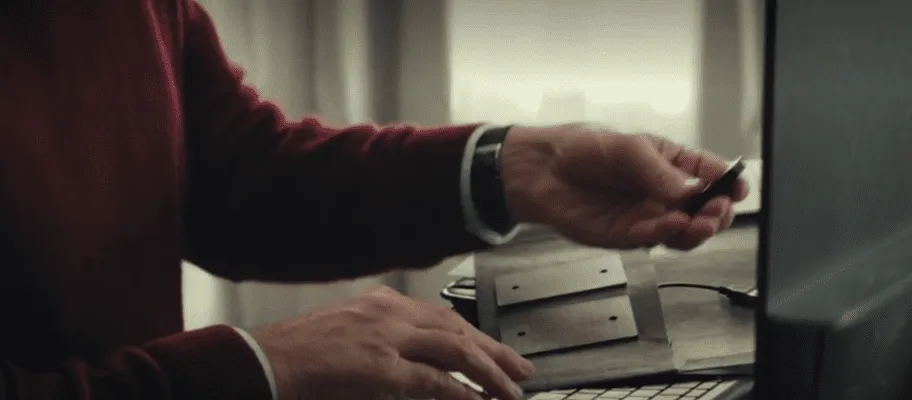
It is only a matter of time before the user realizes he can no longer guess pins. It’s not just for the sake of making life harder, but also as a safety feature to prevent thieves from testing pins endlessly until they get it right. The device will delete its content after 10 unsuccessful attempts, which is a sort of factory reset, and remove the bitcoin keys. Scott only has two chances left to try the code when he realises he does not know it. The user usually has the back-up words stored somewhere so that they can regain access to the wallet even if it is erased because of incorrect PINs. Scott not! He didn’t do anything right.
The 12 words were gone. Not sure where they disappeared. Bitcoin wallets will often make it difficult for the user to remember these words, by displaying pop-ups or reminding them. Back in 2014 wallets warned users that the failure to backup these words would result in a loss. Scott did not pay attention to the set-up, and he did listen to Kevin at that time.
Amy, Scott’s spouse, finds Scott lying in a mess with all his papers and electronic devices scattered about. The night before, Scott and his wife had a fight about finances. He opens up about it to Amy. She persuades him to contact Kevin, the rich crypto-expert who hired Scott in 2014.
Kevin is soon seen in an airport hanging out with a cool, private assistant. She hands the phone over to Scott, her boss. Kevin, who is busy with his schedule, finds the time to give a mouthful of advice to an old friend and former employee. He chastises him for failing to write magic words and gives a speech on financial crypto-revolutions. Scott then asks Kevin if he has ever been married, to which Kevin replies that he doesn’t. The conversation ends with Kevin putting Scott in contact with ‘a guy’ who can break into that Trezor.
It’s important to note that this is not the case, at least in terms of Bitcoin. The majority of the rich Bitcoiners that I have met come from families. They don’t spend their wealth on private jets; instead, they are building out their homestead, homeschooling their kids and — as far as the American variety — stacking guns. This is far from the stereotypical billionaire high tech narcissist that you see in Silicon Valley or here.
Kevin’s scammer Kevin is recommending a number of phone numbers via text messages. Someone that wealthy would also have more contacts. Companies that provide recovery services are mainly focused on locked wallets, like Scott’s. As the credits of the movie point out, there are some scams. It is vital to thoroughly research the company you are working with in order to unlock a wallet. If you’ve lost crypto in a hack or through fraud, it is difficult to recover it. You can report the case to the FBI. However, anonymous cybercrime has been a problem.
The company that has been gaining a reputation as a leader in this field for its wallet recovery consulting and self custody services is The Bitcoin WayAnother well-known company in the niche is Casa.
Anyway, the recovery contact passed on by Kevin convinces Scott to drop the Trezor in an anonymous drop box, and well… let’s just say things don’t go well from there. You’ll have to tell me. experience the ending for yourselfIt’s a lot of fun.
This is the last scene of the film, and it’s a bit confusing. “In 2025, U.S. consumers lost more than 9.3 $billion to crypto scams.” This statistic is misleading because it does not include the fact that legacy financial crimes, including fraud based on identity and financial transactions, total more than $50 billion.
Identity theft costs 24 billion dollars in 2012. Identity theft was reported twice as often as other types of theft in the same year. Business Insider reported that according to the Bureau of Justice Statistics, “identity theft costs Americans $24.7 billion per year, losses for Americans.” household burglary, motor vehicle theft, and property theft “Totaled just 14 billion dollars.” This number has doubled in the last eight years, and now costs Americans millions of dollars. $56 billion Losses in 2020. In the United States, identity fraud could reach $70 billion a year by 2026 if this trend continues. There’s no reason to believe that it has slowed. The fraud is widespread in today’s world, so trusting traditional finance to handle your data is not the best solution.
The film is an excellent exploration of nightmare scenarios surrounding self-custody. It could be used as a metaphor to enhance education about the subject.
Please read our Disclaimer before reading this article. AI is used to enhance our workflow in the editorial process, such as for image generation and quality assurance. The editorial team oversees, reviews, and approves all content. They are responsible for its accuracy and integrity. AI generated images uses only tools trained with properly licensed material. Do not trust Bitcoin. Verify.
“This article is not financial advice.”
“Always do your own research before making any type of investment.”
“ItsDailyCrypto is not responsible for any activities you perform outside ItsDailyCrypto.”
Source: bitcoinmagazine.com


