


BTC, ETH and most altcoins were all down over 80% in October due to the volatility. Whales increased BTC and ETH to 50%, added $2.8B in stablecoins and shifted around 300,000 BTC when support increased to $108,000.
You can read more about it here:
- The month of October saw a lot of volatility in the crypto world. Bitcoin reached $126,000, before falling 13% within a single day to close at around $115,000; Ethereum was near $4,600, and many altcoins suffered losses over 80%.
- The professionals pulled back on risky investments, increasing BTC and ETH from 48.2% up to 50.1%. Stablecoins were raised from 19.8% to 20,5%, with inflows of $2.8 billion, while altcoins dropped to 13.6%.
- Support levels rose to between $108,000 and $110,000. Institutions continued buying during the dips.
In October, crypto markets were all over the map as investors began to focus on Bitcoin and pull back from high-risk bets.BTCEthereum (ETHWhile uncertainty was building,
Bitcoin’s value began at 126,000 dollars, then dropped by 13% on one day. It was the biggest decline in six months. Finestel analysts called it the “biggest liquidation event in history.”
Finestel, in a report on monthly research shared with Crypto.news, noted that the market finished October with a slight gain, despite the recent sell-off. Bitcoin ended the month at around $115,000 (up 4.5%), while Ethereum was near $4600 (up 3%). Most altcoins were hit very hard. Some lost more than 80% of their value in the corrections.
Macro signals
The U.S. shutdown of the government, which began in September and has continued until now, sent mixed signals throughout this month. Trump‘s tariff threats, regional bank problems, and changing Fed policy.
“The whipsaw was brutal. If you felt confused this month, that’s because the market was genuinely pricing in contradictory signals.”
Finestel
Trump’s tariffs against Chinese edible oils were harsh in the first part of October. He denied reports that tariffs would be applied to all products. Financial lenders such as Zions and Western Alliance also reported losses due to fraud and concerns about the spread of credit across risky assets.
Bitcoin also fell, along with other stocks. But relief was slow to come as the stock market fell. Gaza ceasefire 14 Oct. China-U.S. trade talks On Oct. 28, China’s purchase of U.S. soya beans eased the selling pressure.
Trump hints at cutting fentanyl-related Tariffs were cut by half and rates dropped 25 basis point on October 29, a sign that the Fed may be ready to end quantitative tightening earlier, which would allow more money to flow into risky markets. Finestel points out that the September CPI was 3% which was below the expected 3.1%. Markets now expect two further cuts in 2025 despite the fact the shutdown of the federal government still has gaps in data.
The crypto trenches
Markets held up more than price changes indicated. The long-term Bitcoin owners barely changed, while the short-term and medium-term Bitcoin investors who purchased Bitcoins for between $108,000 to $124,000 during the price crash sold.
In the end, support levels increased from $104,000-$112,000 in early October to $108,000-110,000 at the end of the month. Finestel noted that the reallocation of funds is positive because it follows the correction. “reset structure at higher levels rather than breaking it.” Bitcoin’s dominance also increased, from 58% to an impressive 59.48%.
Ethereum has been stable in part due to stakingThe yields were 608% and 30% participation, which gave the floor for corrections. Lido and EigenLayer saw a steady stream of inflows while real-world tokenized assets were available on Ethereum. Pendle was a good example, as it had accumulated tens of billions.
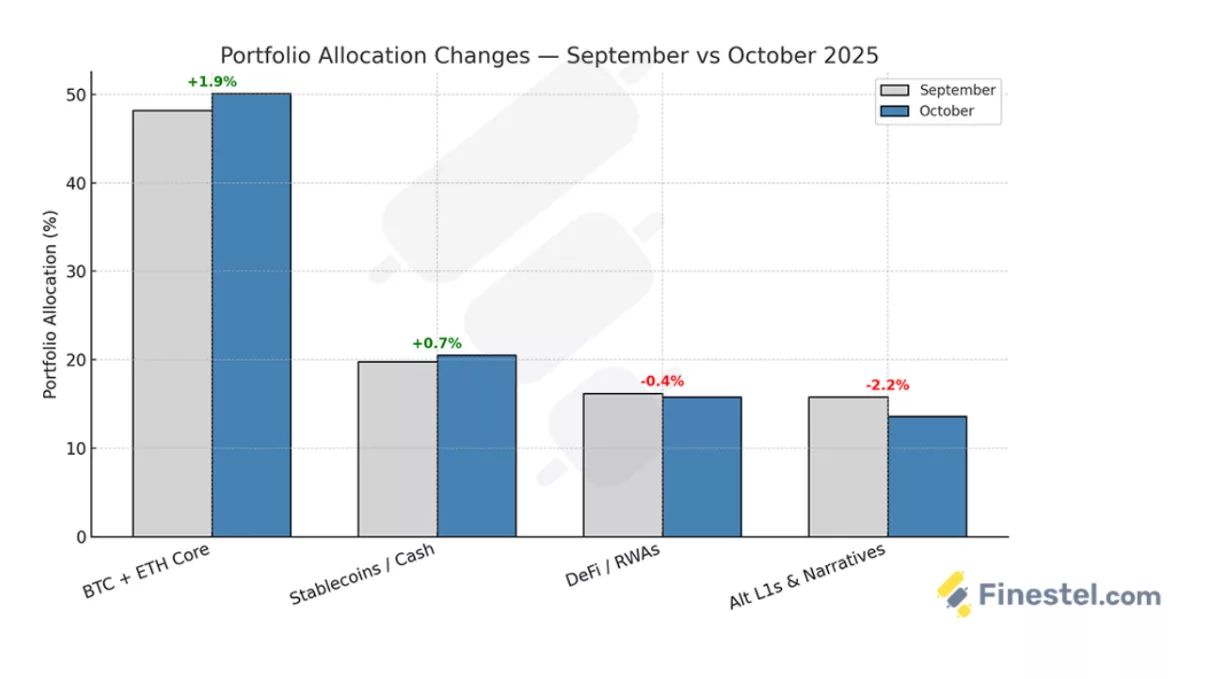
Finestel reported that core BTC/ETH held by portfolios increased from 48.2% up to 50.1%, and stablecoins went from 19.8% to 20.5%, with $2.8 Billion inflows. Tokenized assets and the decentralized finance market fell to 15%, from 16.2%. The riskier bets were cut but yield was kept.
Altcoins fell to 13.6%, from 15.8%. The focus was on Solana.SOLAvalanche) (AVAX). Analysts noted that as risk limits were tightened, maximum loss per position was held between 7-9%, and the portfolio value at risk stayed below 9%. “after watching 82% of liquidations hit long positions during the correction, leverage ratios fell to yearly lows even as prices recovered.”
What is next?
Spot Bitcoin ETFs received $1.4 Billion in Inflows Early October. That was the second largest weekly inflows ever. The corporate treasuries have added 15,000 BTC via Bitdeer or Hut 8 with analysts stating that this pattern has been clear for institutions to keep adding Bitcoin. “treasury asset, but doing it tactically during dips rather than chasing highs.”
Finestel predicts that economic news and trade data will continue to fluctuate. The U.S. report on November 7, which includes jobs, factory, trade, as well as other numbers will be monitored closely following the shutdown. Delay in PCE inflation can also affect Fed planning. China-U.S. discussions could lead to a new deal or a summit, which would increase risk appetite. UK stablecoin rules Markets can also be helped.
Bitcoin’s ability to stay above $108,000 may allow it to move towards $120,000, or even higher. However, tariffs or poor labor data might push it lower. A professional positioning would include 52% of BTC/ETH and 19-20% stablecoins. 16% are DeFi/RWA assets and select altcoins such as Solana and Avalanche.
As Finestel explained, October “tested resilience and professionals responded by concentrating capital in quality assets, building cash positions, and using defined-risk strategies rather than leverage,” The correction probably eliminated extra speculation, and reset the support to a higher level.
“This article is not financial advice.”
“Always do your own research before making any type of investment.”
“ItsDailyCrypto is not responsible for any activities you perform outside ItsDailyCrypto.”
Source: crypto.news


