


BitcoinBTC) mid-size wallet inflows to Binance fell to 3,000–4,000 BTC, marking a multi-year low in sell-side activity from this cohort.
Coinbase recorded about 8,500 BTC of inflows Sunday from wallets similar to this one, while the flows on other exchanges were much lower. The Binance Bitcoin exchange has seen its Bitcoin inflows fall to levels from 2023. But what does this mean for today’s markets?
Inflows of Binance BTC drop sharply from 2023 to 2023 levels
CryptoQuant data classifies mid-size wallets as the entities holding roughly 100–1,000 BTC, often linked to active traders and smaller institutions. These wallets are known to send coins to exchanges in distribution periods. This makes their coin movements a good indicator of near-term sales intent.
Source: CryptoQuant. Binance Inflow Structure by Investor Size. Source: CryptoQuant
Amr Taha, Crypto Analyst noted that seven-day average Bitcoin inflows from this cohort into Binance have dropped to 3,000–4,000 BTC. It is still a far cry from the 5,500-6,000 BTC deposits that were observed between April and May 2023.
As fewer coins have been placed on the exchanges, there is less immediate pressure from the sell side. However, inflows do not necessarily translate to active selling.
This chart also shows that retail players (1-100 BTC), who have smaller wallets, contributed limited amounts of BTC to the market on Tuesday. The flow pattern is more contained than a broad selling pressure.
Related: Bitcoin metrics line up bull signals with $78K the BTC price level to beat
Coinbase dominates Bitcoin flow
Data from CryptoQuant provides a different perspective. CryptoQuant Data shows Coinbase’s mid-sized investor inflows reached 8,500 BTC Sunday. This is a level that was last attained after the collapse of FTX in November 2022.
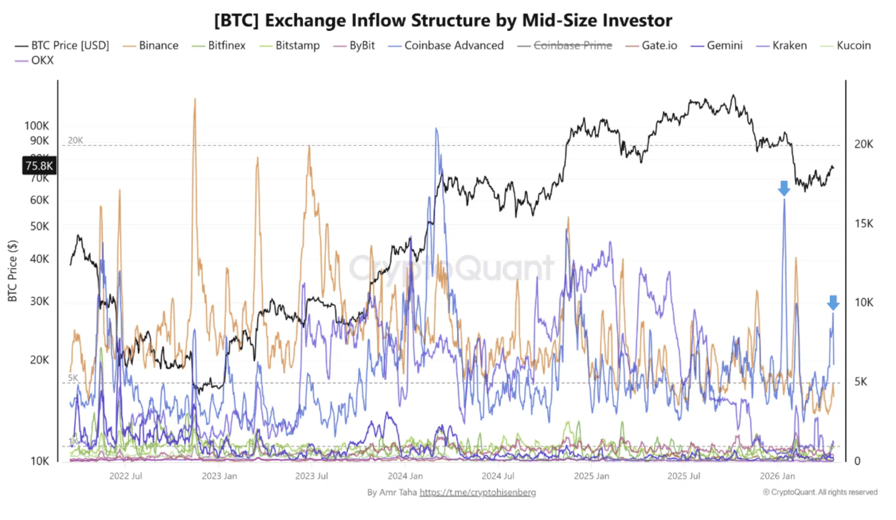
Bitcoin medium-sized wallet inflows at Coinbase. Source: CryptoQuant
BTC trading activity across exchanges has remained fairly muted. Amr Taha stated that in a wide distribution phase there are usually synchronized inflows from multiple exchanges. This is not apparent in the current data.
Coinbase experienced a similar increase in traffic on January 14th, shortly before Bitcoin fell from $95,000 dollars to less than $67,000 dollars by February. However, current conditions are different. Exchange inflows seem to be scattered rather than spread across the market, suggesting mixed feelings rather than coordinated distribution.
Axel Adler Jr.’s Bitcoin research data highlights A deeper change in the dynamics of supply. Bitcoin’s net 30-day flow fell to -350,000 BTC from 94,000 BTC during February. This indicates a significant withdrawal phase. On Tuesday, it was at around -98,000 BTC. The outflows continued to slow down.
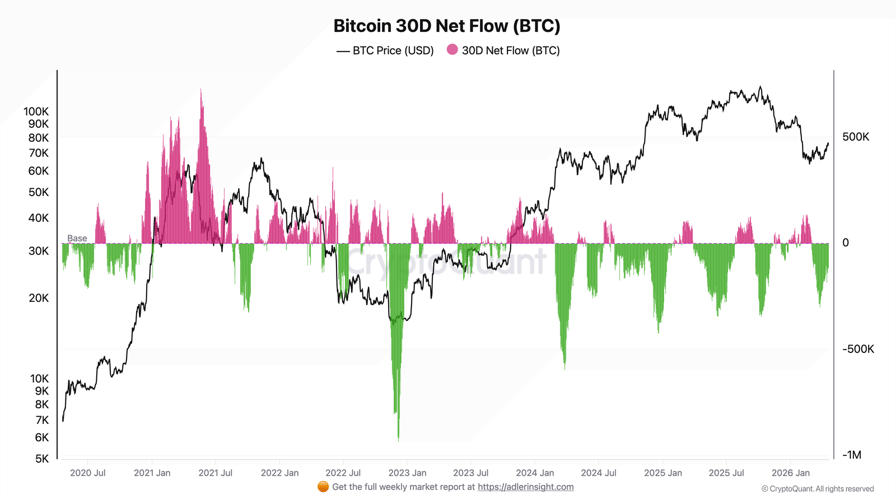
Bitcoin 30D net flows. Source: CryptoQuant
Adler Jr. added Since early March, the exchange reserve has declined by more than 105,000 BTC. Even during the pullback on April 2, which was towards $67,000, no coins were returned to exchanges.
Related: Inside the ‘fake police raid’ that forced a $1M Bitcoin transfer
“This article is not financial advice.”
“Always do your own research before making any type of investment.”
“ItsDailyCrypto is not responsible for any activities you perform outside ItsDailyCrypto.”
Source: cointelegraph.com


