


Research analysts have told Cointelegraph that the recovery of Bitcoin to its previous high could be threatened by growing recession fears. These concerns may ease up if United States and China start tariff negotiations in this month.
Bitcoin and other global risky assets are a popular choice.BTCAnalysts from Apollo Global Management predict a recession for the summer.
“Apollo predicting Summer Recession: Sharpest decline in earnings outlook since 2020,” Samantha LaDuc, a cross-assets analyst Samantha LaDuc, wrote an article on April 26, X post.
According to some experts, progress in the negotiations on tariffs could have the greatest impact on a recession or Bitcoin’s trajectory. Aurelie Barthere is a principal researcher at the crypto intelligence platform Nansen.
“May is seen as pivotal as Chinese shipments reach the US’s shores, and exemptions on some tariff categories such as auto parts and sub-USD-800 shipments from China/ Hong Kong expire,” Barthere, speaking to Cointelegraph said that an absence of negotiations by May could cause an economic downturn. “double-digit losses” Bitcoin.
This is not likely to happen, as neither China or the US ” has an economic interest in the interruption of bilateral trade,” Barthere added:
“Given this, the main tariff scenario is for the US reaching deals or at least ‘agreements in principle’ with its main trade partners, probably settling around the 10% reciprocal tariff ‘floor’.”
Barthere predicted that Bitcoin would likely reach its previous high if the scenario played out, and trade tensions eased in May.
US has “proactively reached out to China through multiple channels,” Reuters has praised the US for its signal that it is open to tariff negotiation. reported Unnamed sources spoke with Yuyuan Tantian, a state-affiliated Chinese news platform on May 1.
Related: Bitcoin treasury firms driving $200T hyperbitcoinization — Adam Back
Bitcoin can still rise despite the recession
Bitcoin could see even more gains if a recession occurs.
“Initially, Bitcoin and cryptocurrencies may experience volatility, dropping alongside risk assets like stocks due to investor sell-offs,” Anndy Lian told Cointelegraph that she is an intergovernmental blockchain advisor and author.
“Historical data, such as Bitcoin’s recovery post-2020 recession, suggests it could rebound, especially if seen as a hedge against inflation.”
“In stagflation (high inflation and slow growth), Bitcoin, often compared to gold, may perform well, attracting investors seeking value preservation. Yet, its increased correlation with the stock market, particularly tech stocks, introduces uncertainty,” Lian added that cryptocurrency investors need to continue watching economic policy changes in order to determine market direction.
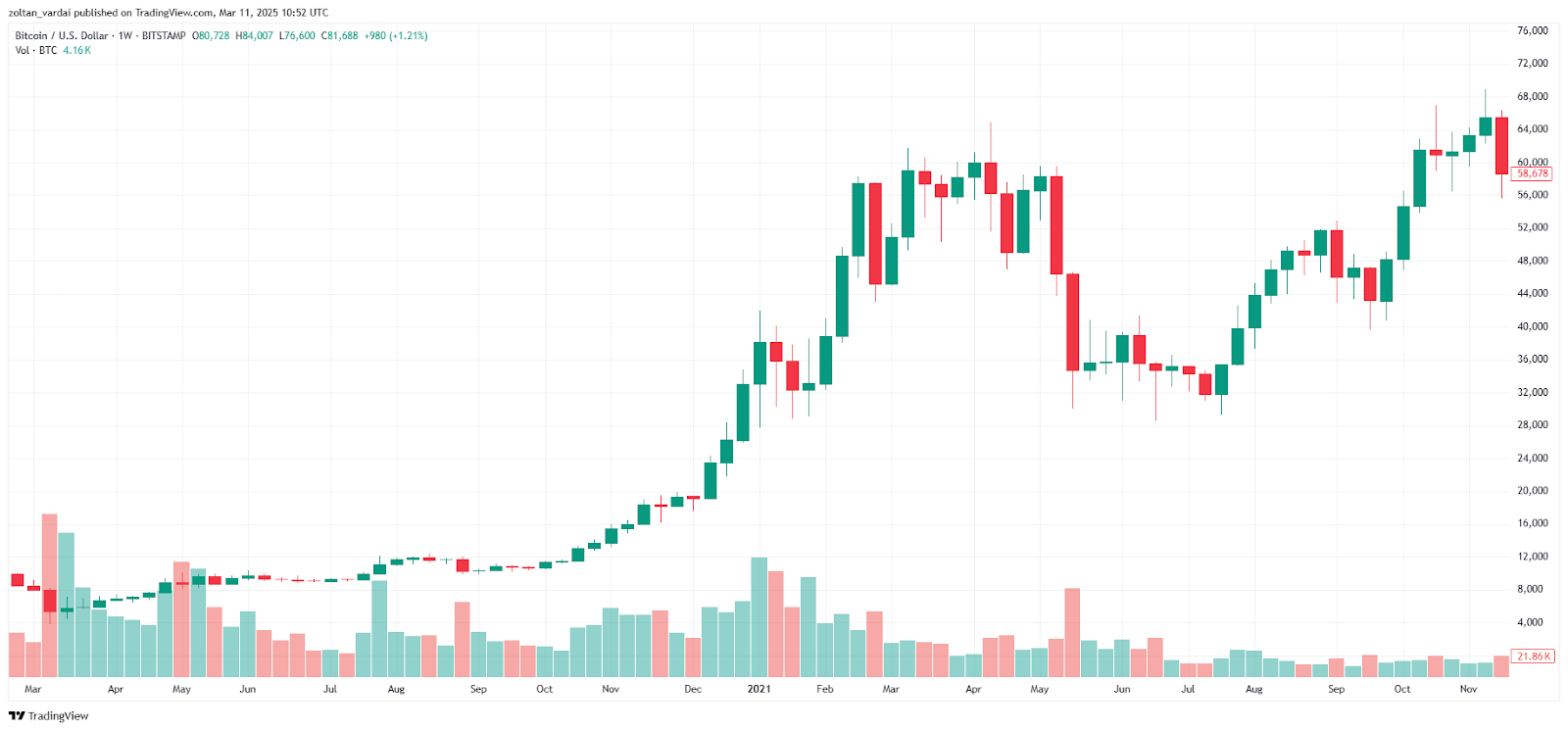
Bitcoin’s growing correlation with technology stocks, however, adds to the uncertainty of this outlook. After the COVID-19 collapse in March 2020 Bitcoin soared 1,050% from $6,000 up to $69,000 by November 2021. This rally was triggered by the Federal Reserve. launched The $4 trillion program will be implemented in March 2020.
Related: Bitcoin to $1M by 2029 fueled by ETF and gov’t demand — Bitwise exec
Some industry observers are still concerned with the response of crypto markets to economic stagnation.
“If the analysts are correct about the recession (which is certainly not guaranteed), crypto markets will likely decline alongside broader risk-on assets and equities,” Marcin Kazmierczak is the co-founder of RedStone and its chief operating officer.
Kazmierczak said April’s “Liberation Day tariffs and trucking slowdown could create economic contagion that historically hits speculative assets hardest.”
“While crypto’s growing institutional adoption introduces some uncertainty, it’s not enough to overcome the fundamental risk-on classification that still dominates market behavior,” He added.
Magazine: Altcoin season to hit in Q2? Mantra’s plan to win trust: Hodler’s Digest, April 13 – 19
“This article is not financial advice.”
“Always do your own research before making any type of investment.”
“ItsDailyCrypto is not responsible for any activities you perform outside ItsDailyCrypto.”
Source: cointelegraph.com


